How to Choose the Best Voltage Stabiliser in 2026? What features and functions should the right voltage stabiliser have to meet your needs? Read our guide and make an informed choice.
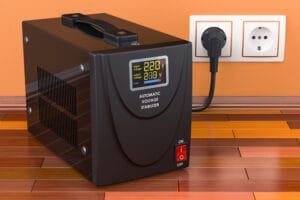 Sudden and significant voltage fluctuations can cause severe damage to major energy-consuming home appliances, rendering them beyond repair.
Appliances such as boilers, air conditioners, refrigerators, and televisions require safeguarding, which a voltage stabilizer can provide.
For those considering purchasing a voltage stabilizer but are unsure of the criteria to evaluate or its operational mechanics, this article is a valuable resource. It offers insights into finding cost-effective voltage stabilizers and selecting the most suitable one for your needs.
Why Choose the Best Voltage Stabiliser?
Why the necessity for a voltage stabiliser? Simply put, it’s about safeguarding your home appliances, particularly those high-current consuming ones we’ve previously discussed.
Power surges have the potential to cause current irregularities, severely damaging electrical circuits beyond repair in the blink of an eye. Imagine damage to a refrigerator, under normal circumstances, would have been safe. Actually, the entire home is at stake as such irregularities could cause a short circuit, leading to fires.
Recommended Top Voltage Stabilisers 2026
Considering the guidance provided, coupled with buyer feedback and the options on the market, we suggest these models of Voltage Stabilisers as top choices for cost-effectiveness.
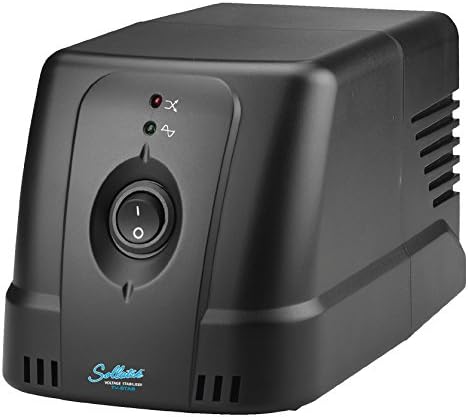
Sollatek TVRight 2A UK plug - Voltage stabiliser for television, Hi-Fi and other 2amps electronic equipment
- Plug & Play Microprocessor controlled stabiliser,
- Very wide input voltage range & excellent output voltage stability
- Includes surge and spike suppression & extremely fast response
- Incorporates over-voltage & under voltage disconnect (HVD+LVD function)
- 10 sec startup delay

Sollatek AC Stab ACS 150L - Voltage stabiliser for Aircon
- Stabiliser with 3 min delay
- 220V

Kemot SER-500 Automatic Voltage Regulator
- Regardless of mains load and output voltage fluctuations, the Kemot SER-500 stabilizer keeps them at 230V ± 8%, which allows…
- KEMOT SER-500 can be used at home and in the office, ideal for audio/video equipment or computers.
- The structure of the stabiliser is based on a toroidal transformer, which ensures stable operation of the device.
- The SER-500 stabilizer is protected against too high and low voltage, overload, overheating and short circuit.
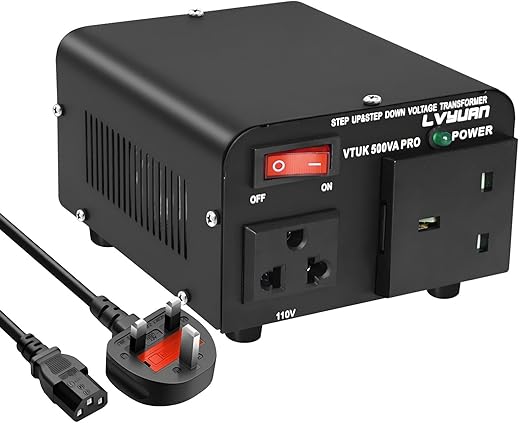
500W Voltage Transformer, 220/240 Volts to 110/120V Step Up Step Down Voltage Converter, UK to US & US…
- HIGH VOLTAGE TRANSFORMER- This power transformer can be used in 110 Volt countries and 220 Volt countries. It will convert…
- 500 WATT STEP UP/ DOWN VOLTAGE TRANSFORMER - 500VA is only peak power, This step up transformer and step down…
- The Voltage Transformer can use for both home use and commercial applications. Apply for many kinds of small household electrical…
- 110V Socket & 220V UK Socket. Included a UK standard plug. (You could buy a US plug by yourself, if…
- FUSE PROTECTED POWER TRANSFORMER - Dual Fuse Protection (120V & 230V). Two outlets on front of the unit, On/Off Power…
- 5 YEAR PARTS & LABOR WARRANTY - Specialized customer service team & technical installation support via email, phone or chat

Kemot Mser-500 Automatic Voltage Regulator 500VA Servo Motor
- Precise, automatic voltage regulator with +/- 3% accuracy
- Automatic voltage regulator can protect your devices from voltage fluctuations, ensure that your device achieves the best performance.
- Applications: computers, lighting equipment, sound equipment, TV, office equipment, etc.
- Package weight: 4.0 kg
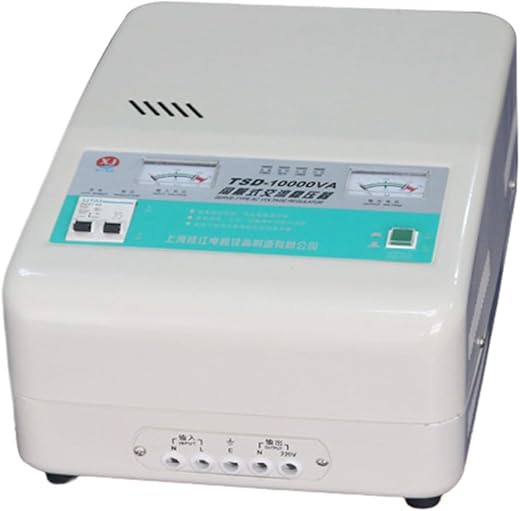
Single Phase Voltage Stabilizer ,Electronic AC Voltage Stabiliser,7KVA Automatic Voltage Stabilizer Wall-Mounted Voltage Regulator For Unstable Household Appliances
- High-Quality Components:high-quality carbon brushes, thickened coils, smart motherboards, smart chips.
- Voltage Regulator:Efficiency: ≥90%,Frequency: 50~60HZ,Load power: 0.8,Wiring method: terminal block wiring,Input voltage: 160- 250V,Output voltage: 220V±3%,110V±6%
- Intelligent Adjustment:When the voltage is unstable, the voltage regulator automatically adjusts to solve the trouble of voltage instability, and the…
- Flame Retardant Shell:Flame retardant insulation outer shell, high temperature resistant, rustproof, anti high pressure and with fine durability.thicken copper part…
- EFFICIENT HEAT DISSIPATION:Large-area heat dissipation hole design, effectively dissipating internal heat, and ensuring stable operation of the regulator.

5000W Heavy Duty Voltage Transformer, Step Up/Step Down Voltage Transformer Converter, 5000W US to UK voltage converter 220V…
- Maximum 5000 Watts: Heavy Duty Step Up/Down Voltage Transformer Converter 5000 Watts. Power ON/Off Switch, Can be Used in 110…
- Circuit Breaker Protection: Full Range Fuse Protection, Full Range Over Current Protection. Fuse will cut off the current if the…
- High Effective: CE Certified, This voltage transformer has 100% loading capacity. It has 6 AC outlets including THREE 110V US…
- Metal Casing & Stable Coil: Made of high quality materials, Stable performance, simple operation, reliable circuit.
- Please Note: This 5000 watts voltage converter is designed only for European/Asian 220V (Single Phase) , Please do not use…

MX322 AVR Automatic Voltage Regulator Stabiliser(MX322Original)
- Instrument Cluster Voltage Regulator
- MX322 AVR Automatic Voltage Regulator Stabiliser
How To Choose the Best Voltage Stabiliser
Choosing the best voltage stabiliser is not always easy. If it’s your first time buying such a device and you’re not well-versed in this field, it can be very difficult to make a good choice.
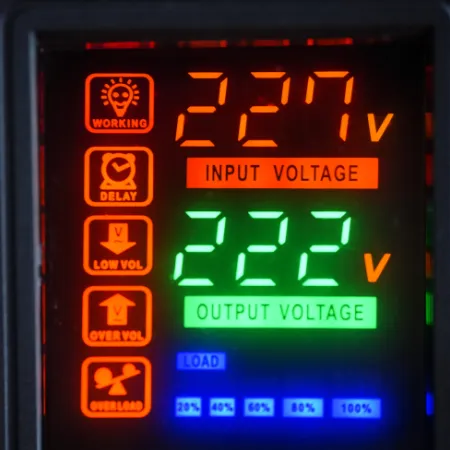 It is therefore necessary to inform yourself well before setting out to find a product. Where can you find information that’s easy to understand? In this buying guide.
You will learn in just a few minutes what the selection criteria are to buy the best voltage stabiliser for you. You will be able to easily differentiate between a product that is too expensive or one that is very good value for money for its features. Also, you will learn about features that only experts know, so you can make the choice like a specialist.
Additionally, at the end, you’ll find a list with the most cost-effective voltage stabilisers in terms of quality-price ratio on the market, available right now, so you will take even less time to find the right option. Here are the aspects to consider.
What is and What Does the Best Voltage Stabiliser Do?
Are you in need of a voltage stabiliser? In short, if you have appliances that utilise electricity, the answer is yes. Factors such as atmospheric conditions, which can cause electrical discharges in the form of lightning, or location-related influences like presence near a strong electromagnetic field or connection to high voltage cables, can lead to sudden and significant fluctuations in your electrical voltage.
These sudden variations, whether the voltage is higher or lower than necessary, can lead to defects. So, how does a voltage stabiliser assist? It’s a device designed to balance the voltage of the current. Consequently, if the input voltage of the current is too high, the unit adjusts it to a suitable level. As a result, the output voltage becomes safe for all connected appliances.
Such a device is incredibly useful during winter when electricity providers tend to experience most issues with current fluctuations. With a stabiliser in place, your boiler will remain protected.
Some individuals find a 12-volt stabiliser particularly beneficial for cars, especially when they have a caravan or frequently use various electrical appliances connected to the car’s battery. In these cases, a stabiliser can protect those devices.
Types of Voltage Stabilisers
You will have to choose between two types of voltage stabilisers: relay or servo-motor. Here’s what you need to know about each:
Voltage Stabiliser with Transformer or Relay
This type is the most economical option available on the market. Given its specific triggering only at fixed voltage levels, it is best suited for electrical appliances with lower power requirements. This model is an appropriate choice if you only need to protect your personal computer, or other small appliances such as an iron, microwave oven, or electric radiator.
To select a model that fits your appliances, identify their power consumption in watts. Multiply this figure by 1.5 or 2. The resulting number should closely match the VA value of the stabiliser best suited for you.
Experts typically exhibit caution when recommending this type of stabiliser due to its significant stabilisation error margin of ±5 to ±10%. In addition, some users have reported supply interruptions during operation, along with a less-than-satisfactory rate of voltage adjustment.
Voltage Stabiliser with Servo-Motor
This model is more suitable for larger consumers, having a margin of error in stabilisation of just 1%. Unlike relay models, it doesn’t control fixed voltage values alone.
It possesses the capacity to analyse a range of voltage input values. Should it detect an irregularity, it will stabilise the voltage so that the output voltage lands safely within an intermediate range. This way of operating significantly reduces errors, thus offering safer protection for appliances such as boilers, fridges, washing machines, etc.
To ensure the chosen model is fit for purpose, the total power in Watts of the appliances you plan to connect should be 2-3 times greater than the VA value of the stabiliser.
As these are more advanced models, it is understandable they come with a heftier price tag. However, the costs do not stop there.
It seems they require more careful maintenance than relay models, which might incur additional expenses. Even so, they represent a more advantageous option than a transformer model.
Hybrid Voltage Stabiliser
A hybrid voltage stabiliser is an advanced solution for protecting electrical equipment against voltage variations.
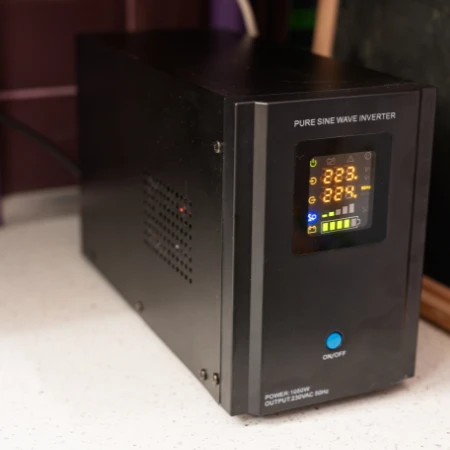 This device combines relay stabilisation technology with servo-motor technology, thus offering increased precision in voltage stabilisation.
The main components of a hybrid stabiliser are the variable tap transformer and the electronic control circuit. The variable tap transformer provides coarse voltage adjustment, while the electronic circuit handles fine tuning and provides a rapid response to voltage fluctuations.
Advantages of using a hybrid voltage stabiliser include:
- Rapid Response: Thanks to the electronic component, the stabiliser can react quickly to voltage fluctuations, thereby protecting sensitive equipment.
- High Efficiency: By combining electromechanical and electronic technologies, the hybrid stabiliser offers higher efficiency compared to traditional stabilisers.
- Durability: The electromechanical component ensures a long lifespan of the stabiliser, while the electronic component reduces mechanical wear.
The use of hybrid voltage stabilisers is recommended in applications where equipment is highly sensitive to voltage fluctuations, such as in the medical field, research laboratories, or the production industry. These stabilisers protect equipment from damage, extending their lifespan and ensuring optimal operation.
Voltage Stabiliser for Boilers
The boiler, being essential equipment in many households and institutions, requires stable electrical supply to operate efficiently and safely. Voltage fluctuations, whether decreases or sudden increases, can affect the performance of the boiler and can even damage it or shorten its lifespan. This is where the voltage stabiliser for boilers comes in.
A voltage stabiliser for boilers is a device specifically designed to regulate and stabilise the electric voltage supplying the boiler. It ensures that the boiler receives a constant voltage, regardless of network fluctuations.
Main advantages of using a voltage stabiliser for boilers are:
- Protection: Prevents damage to the boiler components caused by voltage variations.
- Optimal Performance: Ensures efficient operation of the boiler, avoiding frequent stops or restarts due to voltage problems.
- Extended Lifespan: By reducing stress on the boiler’s components, its lifespan is extended.
Type of Current
If you’re unsure whether you’re using a single-phase or three-phase power supply, you can usually check your electricity meter. If it lists two voltage numbers (one beginning with 2 and the other beginning with 4), you’re likely using a three-phase power supply. If it only starts with 2, you’re using single-phase power.
After figuring out the type of current your household or business uses, it’s essential to calculate the power requirement of your voltage stabiliser. This can be calculated using the formula:
- For a single-phase network: Voltage x Current / 1,000 = kVA
- For a three-phase network: Voltage x Current x 1.732 / 1,000 = kVA
For instance, let’s say you have a single-phase device with a voltage rating of 220 volts and a current rating of 30 amperes, the power size of the voltage stabiliser you’ll need will be approximately 9 kVA (220 x 30 / 1,000).
Considering a margin of safety, where we add 20% to 25% to the calculated kVA, the suitable stabiliser rating for the single-phase device, in this case, would range between 10.8 kVA and 11.25 kVA.
Understanding Voltage Fluctuations
An integral aspect to remember while selecting a voltage stabiliser is your locality’s voltage fluctuation. The operating range should be considered, and the stabiliser you choose should also be capable of managing these fluctuations efficiently.
In other words, if in your area the voltage level varies by a broad margin, it’s recommended to select a stabiliser with a broader working range. This will ensure that even under severe fluctuating conditions, your devices will have a constant and safe voltage supply.
To clarify, take note of the fluctuations that occur in your environment and match these figures with the capabilities of the stabiliser under consideration. A wide working range will offer more flexibility and ensure the stabiliser will function appropriately under a vast array of voltage conditions.
Capacity of the Voltage Stabiliser
Choosing the best voltage stabiliser involves a bit of math. So, we’ll help you calculate your power needs without getting too complicated. The power or capacity of the voltage stabiliser is most often expressed in VA. Some manufacturers also provide the power converted to Watts.
If the latter is not provided, you can easily find out using the formula: W = VA x pf. The pf value represents the power factor, a ratio found in the product description. Thus, for example, if the power expressed in VA is 3000, and pf is 0.8, the corresponding value in Watts will be 2400 W.
Now that you’ve established the real power of the voltage stabiliser, you will need to find out the total power in Watts of the consumers you wish to connect to the device. After obtaining this value, you will need to look for a voltage stabiliser with a power greater than that of all the connected appliances.
Autonomy of the Voltage Stabiliser
In case there’s a power outage, some models can continue to operate for a few more minutes, giving you time to save, for example, important projects or documents to avoid losing them.
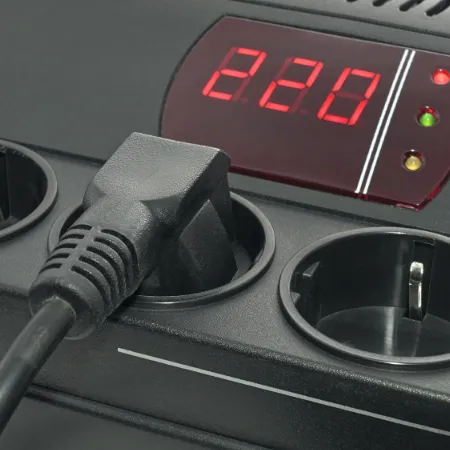 Voltage stabilisers with a battery are usually classified as a type of UPS (Uninterruptible Power Supply). If you have smaller consumers connected, such as a PC, a stabiliser with 10 minutes of autonomy will be sufficient. For larger consumers, like a wood-fired boiler, a longer autonomy, perhaps even several hours, may be necessary.
Protections
The best voltage stabiliser must be equipped with certain protective functions as follows:
- Overload protection – if you have connected consumers whose total value say accidentally exceeds the capacity of the stabiliser, then you need this protection function. In this case, voltage variations will be successfully controlled.
- Short-circuit protection – necessary to ensure the integrity of connected devices in case of sudden power interruptions.
- Overvoltage protection – sometimes values of voltage much higher than the nominal ones can appear in the network. In this case, this protection is useful. Most of the time, it will be a feature found in models with servo-motors.
Important Features of the Best Voltage Stabiliser
Among the most important features that you should find in the product description are the start delay and the function to switch at the input voltage.
- Variation – Variation is a value expressed in percentages, and what you need to remember is that you want it to be as low as possible. A small variation means a percentage below 10%. To understand better, let’s make an example. The reference voltage in the UK is 230V for most households. If the stabiliser’s variation is 10%, the voltage received by the connected appliances will be between 207 and 253 volts, which represents a variation value that is still quite risky.
- Connectors – Every good voltage stabiliser should be equipped with a plug compatible with the model used in the country. If you find a model that suits you in terms of price and features but does not have the right plug, you can use an adaptor. There are quite a few models with an IEC 230 type connector, so you need to be mindful of this aspect as well.
- Efficiency – The voltage stabiliser is itself a consumer, so you will want its efficiency to be as high as possible, to not represent a source of wasteful electricity consumption. Look for models with an efficiency of at least 95%. Anyway, this is not an aspect that should influence your purchase decision too much since any additional cost on the electricity bill will be compensated by the value of the appliances saved by using this stabiliser.
- Noise – Depending on the chosen model, voltage stabilisers can emit noise that is more or less annoying. This aspect matters only when you plan to install the device in a space where you spend a lot of time, such as an office. In this case, you would want the decibel value to be as low as possible, preferably under 60 dB. If you will install the device in an isolated or technical room, you can choose a noisier model at a more advantageous price.
- Display – If you want to be able to check the device’s status and some current-related values at any moment, even from a distance, choose a model with a screen and LED indicators. This is not an aspect that affects the device’s performance and can add to the purchase price, but it is a very appreciated feature by most users. The same screen can also display errors that may occur, allowing you to detect and fix them more easily.
Installing the Best Voltage Stabiliser
There are models that come with ground mounting, meaning they can be placed on a floor or table, and others that have wall mounting features. Experts often recommend opting for models with wall mounting. This way, the device is safeguarded against potential contact with moisture or water, factors that can inflict severe damage, and even pose a risk to the safety of children or pets.
A floor-mounted model is suitable when its size is compact, typically those used for protecting computers and can be conveniently tucked away under a desk.
Conclusion
You can find the best voltage stabiliser for you online. In online stores, you will find larger and more varied stocks than in physical stores, giving you the opportunity to calmly study the market and quickly find recommendations and answers to any questions, without feeling pressured to make a purchase.
It’s very important to consult the review section for the products you’re interested in. Even if a product is highly praised by the manufacturer, user opinions may differ. This way, you’ll be able to avoid an unwise investment and steer towards a better product.
Now that you’ve gone through all this information, you’re ready to buy the best voltage stabiliser for you.
Frequently Asked Questions About Voltage Stabilisers
What is the primary function of a voltage stabiliser?
A voltage stabiliser is a reliable device that performs a vital function by regulating voltage fluctuations. Its main job is to deliver a steady voltage output, despite any inconsistencies in the incoming voltage levels, therefore ensuring the longevity of your home appliances and providing a protective guard against power fluctuations.
Why is a voltage stabiliser essential for home appliances?
Voltage stabilisers are crucial for domestic appliances because they prevent equipment from malfunctioning due to unexpected voltage fluctuation. They assist in considerably boosting the life span of household gadgets and play a crucial role in guaranteeing overall safety at home by ensuring the seamless operation of electrical appliances.
How do I decide which voltage stabiliser is most suitable for my needs?
When selecting a voltage stabiliser, foremost considerations should be the nature of your equipment, its power consumption range, and the degree of voltage fluctuations in your area. Make sure to check the stabiliser specifications, such as its power rating, voltage, and current beforehand.
Can voltage stabilisers help in saving electricity?
Voltage stabilisers themselves do not save electricity, but they can indirectly contribute to energy efficiency. By regulating the voltage supplied to your appliances, a stabiliser can safeguard these devices from high power levels that could potentially lead to overconsumption of electricity.
What are the differences between an electronic and a digital voltage stabiliser?
Electronic voltage stabilisers are relatively classic models that rely on transformer technology. On the other hand, digital voltage stabilisers offer advanced features including LCD displays and smart control systems. Both types function to regulate voltage, but digital models often provide superior precision, automation, and user-friendliness.