

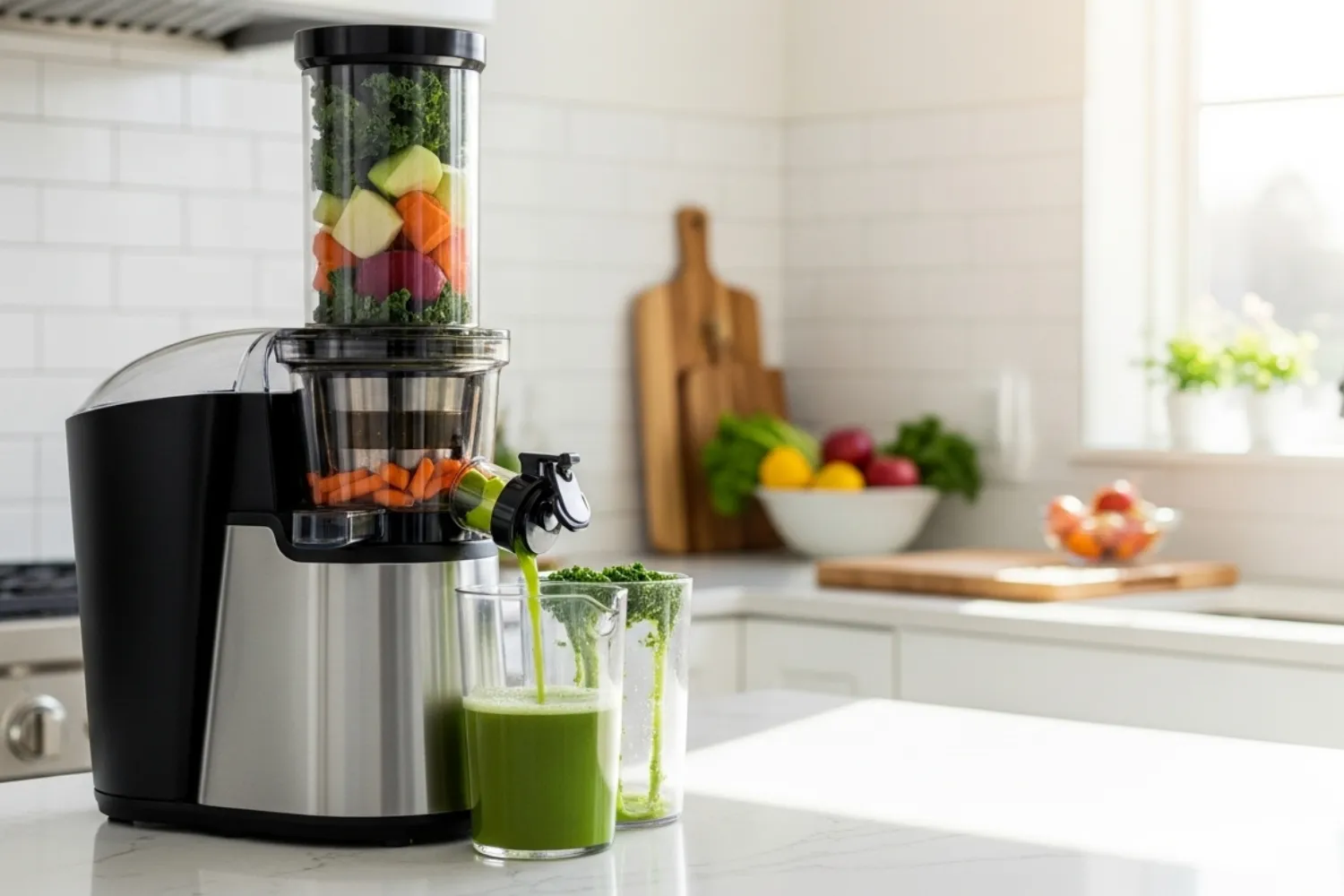
When it comes to choosing the best cold press juicer in 2026, the key is to match the juicer’s design with what you plan to juice most often. If you’re after leafy greens and want versatility, a horizontal masticating juice extractor will serve you better.
However, if you prefer juicing softer fruits and need something quicker with a smaller footprint, a vertical model is ideal. Important factors to keep in mind include juice yield (look out for very dry pulp), ease of cleaning (fewer parts and wide chutes help), build quality (materials should be BPA-free and offer a long warranty), and the quietness of the motor.
Welcome to your definitive guide for finding the perfect cold press juicer. Whether you want to boost your health, enjoy vibrant, nutrient-packed juice, or make the most of fresh produce, you’ve arrived at the right place. A cold press juicer, sometimes called a slow juicer machine or masticating juice extractor, represents a significant step up from the typical centrifugal juicers many of us grew up with.
This type of juicer suits the discerning buyer who values quality over speed. It’s perfect for everyone from busy parents trying to add extra nutrients to their family’s diet, to health enthusiasts wanting to maximise their vitamin intake, or simply anyone who appreciates the exceptional taste of genuine cold-pressed juice.
Picking the correct model is crucial; it can mean the difference between a daily health habit you look forward to and a bulky gadget that ends up gathering dust. This guide will lead you through all the considerations to make sure you invest wisely in a machine that will last you for years.
Recommended Top Cold Press Juicers 2026
Taking into account this guidance, buyer feedback, and current market options, we recommend these cold press juicers as excellent choices for value and performance.

- 108mm Large Feed Chute & 1L Large Capacity Hopper: The Fretta F5000 cold press juicer features a 108mm wide feed chute and a 1L large capacity hopper. Its self-feeding mechanism makes juicing efficient and convenient, reducing the need for pre-cutting. It can juice a variety of fruits, vegetables, leafy greens, and even make nut milk or sorbet. The separated pulp can be used for cooking or fertilizer.
- BPA-Free Tritan Material: Fretta slow masticating juicer built with food-grade, BPA-free Tritan materials, enjoy peace of mind with every sip. For consumers who are health-conscious,choosing a juicer made from BPA-free Tritan material can provide peace of mind, knowing that their juice is not coming into contact with potentially health risks. PCTG marerial offering higher toughness and durability.
- High Juice Yield and Purity: The automatic juicer with a 200W motor uses a multi-stage process (slitting, crushing, squeezing) to ensure high juice yield and purity. Its multi-filter enhances extraction efficiency. The slow speed reduces noise and preserves the natural goodness of produce.

- COLD PRESS TECHNOLOGY: High-torque motor drives ingredients into 9-segment auger which slowly extracts juice and pulp for nutritious, vitamin-packed drinks.
- NEW AUGER DESIGN MINIMISES CLOGGING*: Nine segment design extracts juice and pulp during cold press juicing. (*Compared to predecessor JC100EU.)
- TOTAL PULP CONTROL: Powers through pulp for hassle-free juicing** (**Tested on 320g carrots.) Includes 2x filters for drinks with less pulp or more pulp.


- 5.3" Feeding Chute: Discover the power of our 300W masticating juicer. With a large 5.3" feeding chute, it's easy to assemble, operate, and clean. You can easily add whole apples and veggies directly into the wider and larger feed chute. The automatic feeding design ensures a quick, fresh, and flavorful glass of juice every time
- Easy to Clean: The juicer is simple to clean and assemble, ideal for anyone who avoids complex systems. It has a single auger and a filter without metal, reducing the number of parts to handle
- BPA-free for Your Well-being: With our BPA-free juicer, you can confidently enjoy fresh juice. Savor the pure, natural flavors of your favorite fruits and vegetables without the concern of harmful chemicals

- Whole Fruit & Vegetable Auto-Cut: TUUMIIST Cold Press Juicer features a 120mm large feed chute that fits whole apples, oranges and pears – with a built-in auto-cutting blade, there’s no need for chopping at all. It’s ideal for hassle-free juicing on busy mornings, when prepping for camping trips, or during family gatherings.
- Compact & Space-Saving Design: This lightweight masticating juicer is tailored for small UK kitchens, narrow countertops and city apartments. It’s easy to store, and portable enough to take on picnics, outdoor trips and caravan getaways.
- Cold Press to Lock Nutrient: 55RPM low-speed cold press juicer preserves vitamins/enzymes. Post-workout/post-work refuel & energizing breakfast boost—no oxidation, pure flavor.

- 🍏✔[Self Feeding Juicer] AMZCHEF New Generation Cold Press juicer is different from traditional juicer machines, 145mm large opening and 2 litre capacity juicers for whole fruit and vegetable, saves you from the tedious task of repeatedly feeding ingredients to slow juicer. 2 litre large capacity juicer means you can make a lot of juice at once, AMZCHEF juicer is perfect for batch juicing, family breakfasts or healthy individual meals.
- 💪✔[250W Powerful Juicer Machines] AMZCHEF slow juicer adopts cold press masticating technology, equipped with 250W strong power motor for the auger, masticating juicer machines extract juice from each cell through a multi-stage slitting, crushing and squeezing process, outperforms other cold press juicer to maximise juice yield and retain original nutrients.
- 💡✔[Innovative Triple Filter Juicer] AMZCHEF Juicers for whole fruit and vegetable are superior to most slow masticating juicer due to its triple filter with 2mm, 0.8mm and 0.5mm mesh, which allows for a smoother flow of juice, resulting in increased juice yield and purity. As well as making healthy juices, the multifunctional slow juicer cold press is also capable of making rich vegan nut milks. An ideal gift for family and friends!

- Innovative Dual-Stage Extraction: Our cold press juicer features an upgraded screw structure utilizing an innovative dual squeezing process. Through two distinct squeezing phases, it maximizes juice extraction from fruits and vegetables while maintaining consistently low temperatures. This method effectively preserves 100% of vitamins, antioxidants, and natural enzymes—ensuring nutrients remain intact without thermal degradation. The dual squeezing design not only enhances efficiency but also minimizes oxidation, delivering unparalleled freshness and flavor in every sip.
- 230nm HIGH-TORQUE, 350W Powerful Motor: Our juicer’s powerful 350W motor with a high torque of 230nm rapidly separates pulp from juice with minimal effort, delivering purer taste and higher juice yield. Effortlessly processes hard ingredients like wheatgrass, celery, and ginger, while removable parts ensure quick cleanup.
- 4.9" Wide Feed Chute: Juice whole fruits with Anybear cold press juicer in seconds — zero chopping! Cut prep time by 70%! Toss whole apples, carrots, and leafy greens directly into the extra-wide chute. It preserves 15% more nutrients compared to pre-cut produce.

- ✔[4-IN-1 Kitchen Assistant] - When you install the corresponding accessories (not included in the juicer package), the juicer can be transformed into a meat grinder, slicer shredder, sausage stuffer, 4 in 1 juicer machine is a great helper for many cooking tasks. Note: Search for "ZM1501 Accessories" to get them, accessories are sold separately and are not included in the juice maker package.
- ✔[Ultra-High Juicing Rate] - The AMZCHEF juicers developers know that the more juice is extracted, the more times the fruit has to be masticated, which is why the AMZCEHF cold press juicer is equipped with an upgraded 7-stage auger that allows for an extremely high juice extraction rate. If you choose this slow juicer, it is a great way to avoid wasting ingredients.
- ✔[Juice without Pomace] - The slow masticating juicer machine is equipped with a stainless steel filter with a fine and dense mesh, which adequately separates the juice from the pomace. Every sip you take is a pure, delicate juice.

- Extra-large Capacity: The Canoly juicer features a 150mm extra-wide feed chute and a 2.6-litre high-capacity hopper, allowing you to feed whole fruits (such as apples and oranges) and vegetables (such as carrots, kale, and beetroot) directly into the juicer, saving you preparation time.
- 3-IN-1 Filter System: Comprising a juice filter (for fresh fruit, vegetables and all nuts) + a sorbet filter (for frozen fruit). This cold press juicer's dual filter system caters to all needs—Be it juice, sorbet or anything else!
- New Silent Brushless AC Motor: The Canoly C16 Juicer features an ultra-quiet, durable motor (noise level just 35 decibels), ensuring kitchen operation does not disturb living areas. The motor carries a 15-year warranty (see the “Warranty” section for details).
What is a Cold Press Juicer and How Does it Work?
A cold press juicer is a machine that extracts juice from fruits and vegetables through a slow, masticating process. The term ‘masticating’ means ‘to chew’, which is a helpful way of imagining how these juicers function. Rather than using fast-spinning blades that create heat and cause oxidation, a slow juicer machine employs a rotating auger—like a screw—that crushes and presses the produce against a screen.
This process, known as low-speed juicing, works at much lower revolutions per minute (RPM). The slow, powerful pressing reduces heat and exposure to air, protecting the delicate vitamins, enzymes, and minerals in your produce. The end result is a more vibrant, tastier, and most importantly, nutrient-rich juice with a longer shelf-life—up to 72 hours when refrigerated. A good quality masticating juice extractor often yields more juice from the same amount of fruit and veg, leaving behind drier pulp.
How to Choose the Best Cold Press Juicer: A Complete Buying Guide
Finding the ideal cold press juicer isn’t about locating the one “best” model on the market—it’s about finding the one that’s best for you. Your lifestyle, kitchen space, budget, and even favourite juices will influence what works. From my extensive experience reviewing and using these machines, the happiest owners are those who honestly identified their needs before purchasing. Let’s explore the details so you can be one of them.
Start with Why: What Do You Intend to Juice?
Before browsing models, ask yourself a simple question: what will be the star ingredient of your juicing adventures? This answer is the most important guide when choosing a slow juicer machine, as different machines excel at different tasks.
Are you envisioning vibrant green juices packed with kale, spinach, or wheatgrass? Or do you prefer classic blends like apple, carrot, and orange? Maybe you want a versatile machine that can also make nut milks, sorbets, or baby food. Being clear on this at the start quickly narrows your search and helps avoid buying a machine that ends up frustrating you. A common mistake is choosing a juicer that handles hard vegetables well but struggles with the soft fruit you want to use most.
The Great Debate: Vertical vs. Horizontal Cold Press Juicers
The first big decision you’ll face is whether to choose a vertical or a horizontal cold press juicer. Both use the same masticating technique, but their orientation greatly influences their performance, size on your counter, and versatility.
The Vertical Advantage: Speed and Space
Vertical juicers have the auger standing upright. Their main advantage is gravity; they are usually semi-self-feeding, so you spend less time pushing the produce. This generally makes juicing slightly faster. Their slim, upright shape also means they take up less countertop space, which is popular in many British kitchens where space is limited.
From my experience, vertical juicers are excellent for people who mostly juice a combination of soft and hard fruits and vegetables such as apples, cucumbers, carrots, and oranges. However, they can occasionally struggle with very stringy or fibrous greens like kale or celery, sometimes becoming clogged if you feed them too quickly. Cleaning can be a bit more tricky, as these models often have more nooks and crevices in the juicing bowl and screen.
The Horizontal Powerhouse: Versatility and Leafy Greens
Horizontal masticating juice extractors have an auger positioned parallel to the counter. This design is unbeatable when it comes to handling leafy greens. They process kale, spinach, wheatgrass, and herbs with great efficiency, producing a higher yield of juice and dry pulp. Their pulp extraction is typically very efficient, reducing the risk of juice backing up.
Moreover, horizontal juicers tend to be more versatile. Many come with attachments or nozzles for making pasta, breadsticks, nut butters, sorbets, and baby food. The downside is they take up more counter space and usually require more active pushing to feed produce into the auger. They are the workhorses of the cold press juicer world, built for performance and flexibility.
Juice Yield and Efficiency: The True Measure of Value
The price you pay upfront for a slow juicer machine tells only part of the story. Real value appears after months and years of use, which is where juice yield matters most. A highly efficient machine will save you a lot of money on produce over time.
Why Dry Pulp Matters
The best way to judge the efficiency of a masticating juice extractor is by the dryness of its pulp output. Your aim is for a machine that produces dry, crumbly pulp. If the pulp is wet and heavy, it means much juice—and your money—has been wasted. When testing different models, I always squeeze the pulp by hand. A top-quality machine leaves pulp that feels like sawdust; a lower-quality one squeezes out a surprising amount of liquid.
Maximising Your Investment
A machine that extracts 10-20% more juice can justify its higher cost over a few years, depending on how often you use it. When comparing models, check reviews that mention pulp dryness—it’s a far better sign of performance than marketing claims. Efficient pulp extraction is a hallmark of a quality appliance that values both your health and your wallet.
Nutrient Preservation: The Science Behind Low-Speed Juicing
The main reason to choose a cold press juicer is to get the most nutritionally complete juice possible. This is achieved through a gentle, low-speed juicing method that reduces heat and oxidation—two major enemies of fresh juice.
Oxidation: The Enemy of Fresh Juice
Centrifugal juicers operate at thousands of RPM, flinging produce against a sharp-toothed screen. This violent action traps a lot of air in the juice, causing rapid oxidation. You’ll notice this as foam on the surface and juice that discolours quickly. Oxidation breaks down enzymes and vitamins, lessening the health benefits.
A slow juicer machine runs much slower, generally between 40 and 100 RPM. The auger crushes gently, introducing very little air. This creates a more consistent, vibrant juice with minimal foam, which shows the juice retains its nutrients. That’s how you get genuinely nutrient-rich juice.
What the RPM Number Really Means
While lower RPM tends to be better, don’t fixate on numbers alone. A well-designed auger spinning at 80 RPM may extract nutrients more effectively than a poorly designed one at 40 RPM. What truly matters is the combination of slow speed and an effective pressing mechanism. From my research, any juicer running under 100 RPM qualifies as a true cold press juicer able to preserve nutrients properly.
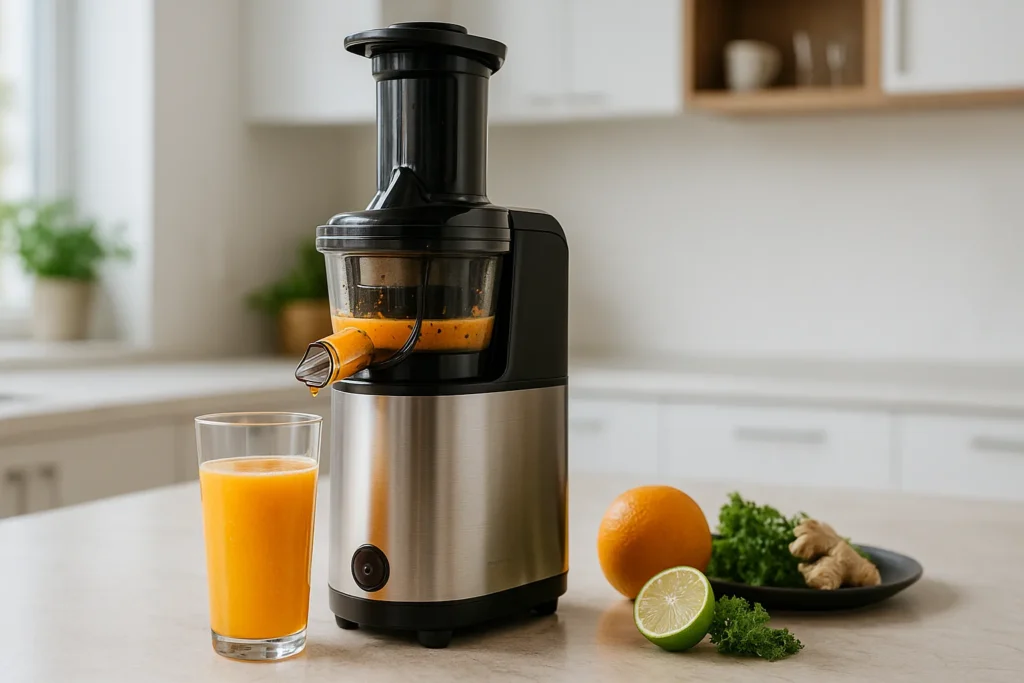
The Usability Factor: Assembly, Cleaning, and Daily Use
This is often the deal-breaker. The best juicer in terms of power and efficiency is useless if it’s so fiddly to assemble and clean that you lose motivation. Brands have greatly improved usability, but there’s still a wide difference between models.
A Common Pitfall: The Juicer That’s Too Hard to Clean
I cannot stress this enough: difficult cleaning is the main reason juicers end up back in cupboards. Before buying, watch videos showing the cleaning routine of your chosen model. Here’s what makes a juicer easy to clean:
- Fewer Parts: The less you have to wash, the better. Integrated designs help reduce complexity.
- Simple Assembly/Disassembly: It should be straightforward and intuitive to take apart and reassemble. Alignment guides or marks are very helpful.
- Included Cleaning Tools: Good models usually come with brushes designed to clean the filter screen, essential for scrubbing away fibrous pulp.
- Wide Pulp and Juice Spouts: Narrow spouts are trickier to clean and prone to blockages.
- Dishwasher-Safe Parts: Although parts often require rinsing straight after use, having dishwasher-safe components for a thorough clean is a major plus. Always check manufacturer instructions.
Features That Simplify Your Life
Look for thoughtful features. A reverse function is essential—it helps clear jams without having to dismantle the whole machine. A pulp control lever lets you adjust pressure to suit different produce, increasing yield. Wide feeding chutes reduce chopping prep time, although very wide chutes are more common on vertical juicers.
Motor Power, Durability, and the All-Important Quiet Motor
The motor is the heart of your masticating juice extractor. Its quality determines power, lifespan, and noise level in your kitchen.
Decoding Wattage in a Slow Juicer Machine
Unlike centrifugal juicers, high wattage doesn’t always mean better performance in a cold press juicer. Because they depend on torque (twisting force) rather than speed, a well-designed 150-200 watt motor is plenty powerful to crush hard veggies like carrots and beetroot. Don’t be drawn in by high watt numbers alone; focus on build quality and warranty instead.
The Beauty of a Quiet Motor
One of the nicest surprises for new users is how quiet a slow juicer machine is. Centrifugal juicers can sound like jet engines, making them awkward to use early in the morning. Slow juicers hum gently, allowing you to make juice without waking everyone. This feature alone often convinces people to stick with the cold press method.
The Importance of a Good Warranty
A lengthy warranty is a manufacturer’s sign of confidence in their product. Look for juicers offering long motor warranties—often 10, 20 years, or even lifetime—and separate shorter warranties on the parts (usually 1-5 years). This shows the core motor is built to last, which matters since it’s an appliance you’ll use daily.
Material World: Build Quality and Food Safety
The materials used influence durability, safety, and even juice flavour. Always prioritise food-safe, high-quality materials.
BPA-Free is Non-Negotiable
All parts touching food—the auger, screen, bowl, and jugs—must be made from BPA-free material. Bisphenol-A can leach from some plastics into your juice and is best avoided. Trusted brands clearly label their products BPA-free. If it’s not mentioned, be cautious.
Stainless Steel vs. High-Grade Plastics
Housings are usually either stainless steel or high-grade plastic. Stainless steel looks premium and is very durable but can be pricier. Plastics like Ultem, commonly used for augers and screens, are tough, stain-resistant, and safe for juicing. The key is to avoid cheap plastics that crack or warp over time.
Kitchen Real Estate: Size, Weight, and Footprint
Before settling on a model, measure your space carefully. Consider not just how much countertop it takes up, but also overall height—especially if you want to slide it under cupboards. As mentioned, vertical juicers are more compact, while horizontals are longer. Also, consider weight; heavier machines feel stable but are less easy to store away if you don’t keep them on the counter.
Beyond the Juice: Exploring the Versatility of a Masticating Juice Extractor
If you’re investing in a premium appliance, it’s worth exploring what else it can do. Many horizontal, and some vertical, models can become multi-purpose food processors with suitable attachments.
Common extra functions include:
- Making Nut Milks: Soak nuts like almonds overnight and run them through with water for fresh, creamy milk.
- Creating Frozen Sorbets: Use a blank screen or homogenising attachment to blend frozen fruits into healthy desserts.
- Grinding Coffee or Making Nut Butters: The strong, slow-turning auger in robust horizontal models can handle these tougher tasks.
- Extruding Pasta and Noodles: Some high-end horizontal juicers come with nozzles for fresh pasta making.
If these extra features appeal, they might justify a higher price and make a cold press juicer an even more valuable kitchen addition.
Setting a Realistic Budget: From Entry-Level to Premium
Cold press juicers are an investment, with prices typically ranging from about £100 to over £500. Here’s a rough idea of what the money gets you:
- Entry-Level (£100 – £200): Usually vertical models with decent performance on basic fruits and vegetables. Build quality may include less robust plastics, and motor warranties tend to be shorter. These are great for those trying out the cold press lifestyle.
- Mid-Range (£200 – £350): The sweet spot for many buyers. You’ll find top-quality vertical and horizontal models from respected brands, with better materials (like Ultem), higher juice yields, quieter motors, and longer warranties. Many of the best-value options fall here.
- Premium (£350+): These are flagship models, often horizontal juicers with stainless steel parts, offering maximum juice yield, lots of attachments, and commercial-grade durability backed by very long or lifetime motor warranties.
A key tip: see this as a long-term investment. A well-made £300 slow juicer machine used for five years is likely cheaper overall than a £150 model that yields less juice and needs replacing after only two years.
Conclusion
To sum up, the journey to choosing the best cold press juicer is very personal, shaped by your preferences and needs. Start by identifying what you’ll juice most, which will direct you toward either a compact vertical model or a versatile horizontal one. Then focus on long-term value: excellent juice yield (look for dry pulp!), simple cleaning, and durable build with a solid warranty. Remember that the quiet operation and superior nutrient preservation are the key advantages you’re investing in.
Don’t be swayed just by price or fancy advertising. Spending slightly more on a well-built, efficient, and easy-to-clean juicer will reward you with delicious, nutrient-rich juice daily and save money on produce over time. By following the advice in this guide, you’re now ready to cut through the noise and choose a masticating juice extractor that will become a loved part of your healthy lifestyle. Go find the perfect juicer for you!
Frequently Asked Questions (FAQs)
Is a cold press juicer really better than a centrifugal juicer?
Yes, for most people’s goals, it is significantly better. The main difference is in how juice is extracted. A cold press juicer uses a slow, crushing auger (low-speed juicing) that reduces heat and oxidation. This produces a higher quality, more nutrient-rich juice with better taste and longer shelf life (up to 72 hours). Centrifugal juicers spin at high speed with blades that add heat and air, breaking down nutrients faster. A slow juicer machine also gets more juice from the same amount of produce, especially from leafy greens, making it more economical over time.
How long does it take to make juice with a slow juicer machine?
“Slow” refers to the RPM of the motor, not necessarily the time to make a glass of juice. Although the auger rotates slowly, the process is continuous. Preparing the produce—the washing and chopping—is usually the most time-consuming part. Once feeding begins, a masticating juice extractor can produce juice in just a few minutes, roughly equal to a centrifugal juicer. Vertical models may be a little faster because they are semi-self-feeding, but the difference for a single glass is usually small.
Are cold press juicers hard to clean?
They can be, which is why cleaning ease should be a top priority when buying. A common mistake is leaving pulp to dry inside the machine. The secret to easy cleaning is to rinse parts under running water immediately after juicing—this takes under a minute. Modern designs have improved greatly, offering fewer parts, wider chutes, and cleaning brushes tailored for the filter screen. Many models now include dishwasher-safe parts. It’s wise to watch cleaning videos of your chosen model before purchase.
Can I juice soft fruits like berries and mangoes in a cold press juicer?
Yes, but with some caution. Cold press juicers work best with firmer produce. Very soft fruits like mangoes, bananas, or overripe berries may create a puree rather than juice, and can clog the filter. A good tip is to alternate soft fruits with hard ones (for example, a handful of berries then a piece of apple or carrot). This helps push the softer pulp through and improves pulp extraction and yield. Some premium juicers also have settings or attachments for soft fruits.
What does the ‘reverse’ function on a masticating juice extractor do?
The reverse function is essential. It spins the auger backwards to clear jams caused by hard produce pieces or fibrous greens getting stuck. Instead of having to stop and dismantle the entire juicer, you just hold the reverse button for a few seconds. This frees the blockage and lets you continue juicing. It saves time and frustration, so we recommend not buying a cold press juicer without this feature.
Informative video
Last update on 2025-12-04 / Affiliate links / Images from Amazon Product Advertising API
This product presentation was made with AAWP plugin.


