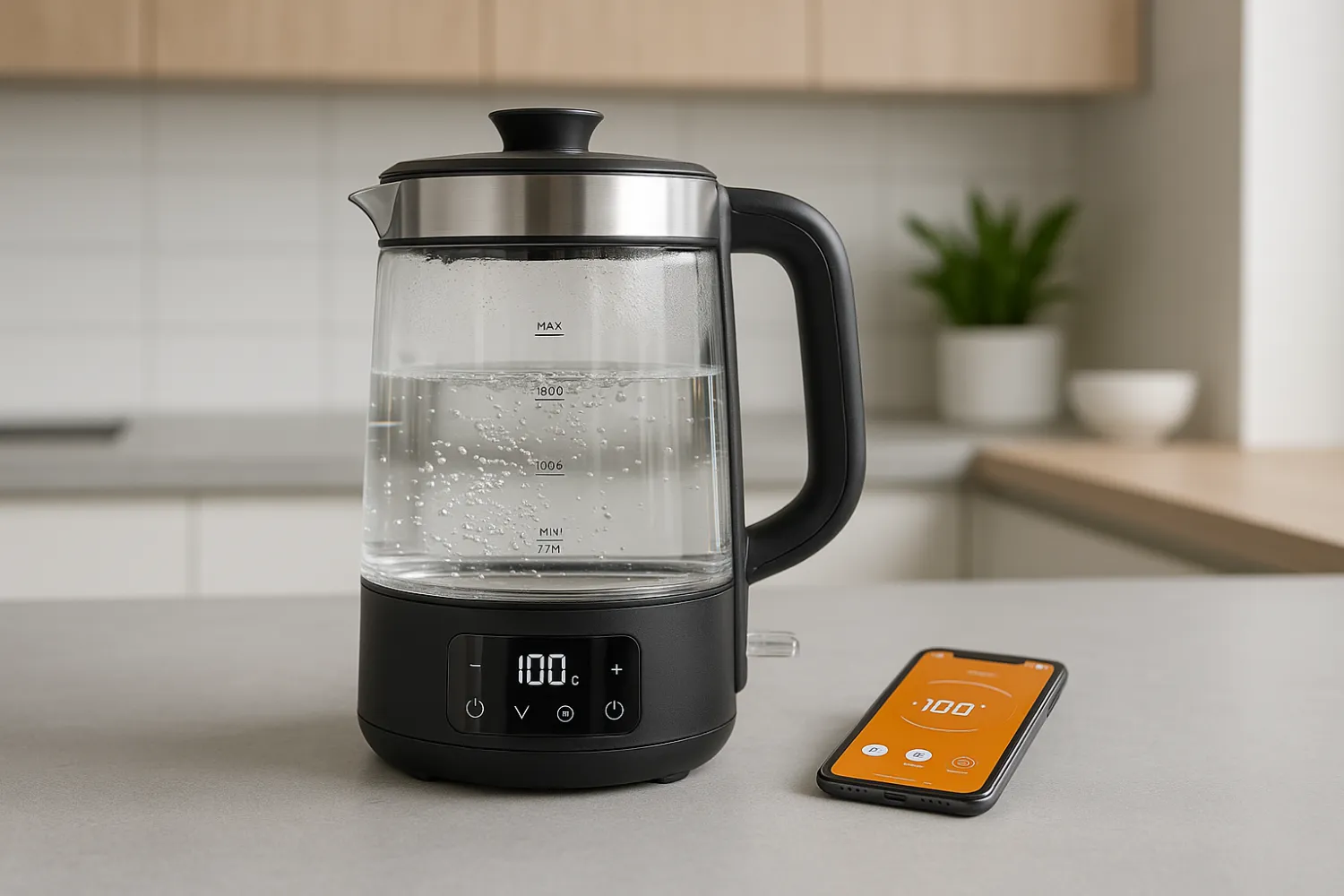
Choosing the best smart tea kettle means finding the right balance between advanced features and everyday usefulness. The perfect kettle for you will offer precise temperature control to brew your tea just right, dependable Wi-Fi connectivity for ease of use, a size that fits your household’s needs, and sturdy build quality that promises long-lasting value. You should look for kettles with an easy-to-use app, strong safety features, and energy-efficient rapid boil capabilities.
The simple kettle has been a staple in British kitchens for many years, faithfully serving us our everyday cups of tea. But times have changed, and so have kettles. Enter the smart tea kettle, a modern gadget designed to bring accuracy, convenience, and a touch of luxury to your tea and coffee habits. Whether you’re a serious tea lover, a coffee enthusiast, or someone who simply enjoys efficiency and control, the right Wi-Fi kettle can really enhance your daily routine.
From my background in technology and consumer products, I’ve noticed that many so-called ‘smart’ devices often fall short of their promises. Yet a well-chosen smart tea kettle stands apart. It’s not just a fancy gadget; it’s a practical tool. It suits the green tea drinker who knows 80°C is the ideal temperature to avoid bitterness, the new parent needing sterile water boiled to 100°C and then cooled precisely for a baby’s bottle, or the busy worker who wants to start boiling water from their phone before getting out of bed. This guide is aimed at the practical British buyer who researches carefully, valuing reliability and worth above all else. We’ll cover all you need to know to make a smart purchase.
Recommended Top Smart Tea Kettles 2026
Based on the advice here, alongside customer reviews and what’s available on the market, we recommend these models of Smart Tea Kettles as the best value choices.
No products found.
What is a Smart Tea Kettle and How Does it Work?
At its simplest, a smart tea kettle is an electric kettle that can link up to your home’s Wi-Fi or your phone via Bluetooth. This connection unlocks a bunch of clever features, with remote control and precise temperature setting being the key ones. It’s more than just a kettle – it’s like a precision water heater.
The ‘smart’ features usually come through a dedicated smartphone app. This app lets you switch the kettle on or off, choose the exact water temperature, and even set it to start boiling at a set time. The best models, often called Wi-Fi kettles, can also work with voice assistants like Amazon Alexa or Google Assistant, so you can simply say, “Alexa, boil the kettle to 85 degrees.” Inside, the kettle uses smart sensors and processors that all work together to provide precision heating for the perfect brew, making it an excellent example of a temperature control kettle.
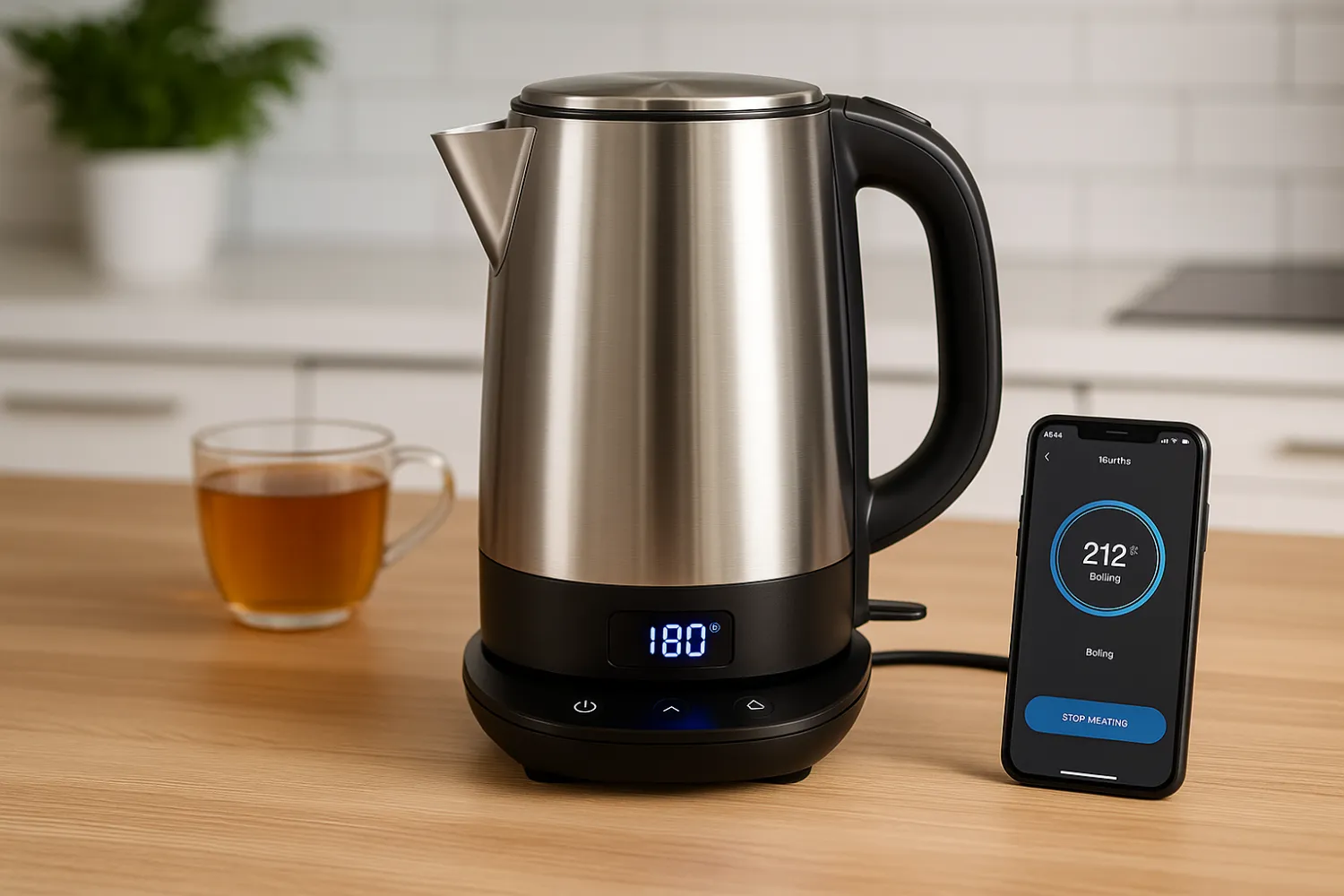
How to Choose the Best Smart Tea Kettle: A Complete Buying Guide
Choosing from the world of smart home gadgets can be tricky. When it comes to picking a smart tea kettle, you might find yourself overwhelmed by technical specs and marketing terms. From analysing many consumer products, my advice is to focus on how each feature will genuinely benefit your everyday use. A practical purchase solves a problem and offers lasting value. Let’s break down the key points to help you find the ideal model for your kitchen.
1. Connectivity and Smart Features: The Brains of the Operation
The ‘smart’ part of a smart tea kettle comes down to its connectivity. This is what sets it apart from a normal electric kettle, so it’s important to understand the choices.
Wi-Fi vs. Bluetooth Connectivity
The two main ways a kettle connects are via Wi-Fi or Bluetooth. A Wi-Fi kettle connects straight to your home’s internet router. Its main benefit is range – you can control it from anywhere you have internet access. That means you could start boiling water on your way home, so it’s ready as soon as you walk in. This is the height of convenience.
A Bluetooth smart tea kettle pairs directly with your phone but has a limited range, usually about 10 to 15 metres. This is fine if you’re in the same room or nearby, but you can’t operate it when out and about. From what I’ve found, while Bluetooth kettles often cost a bit less, a Wi-Fi kettle gives a much more dependable and truly ‘smart’ experience. If your budget allows, I always suggest choosing Wi-Fi.
App Usability and an Intuitive Interface
A good smart tea kettle is useless if its app is buggy or hard to use. Before buying, it’s worth checking the App Store or Google Play and reading what users say about the app. Are there frequent dropouts? Is it difficult to navigate? One common mistake is purchasing a great kettle only to be let down by poor software.
A top app should be simple, quick to respond, and user-friendly. Basic functions like setting the temperature, starting a boil, and accessing presets should be easy to find. The best app-controlled kettles offer customisable presets so you can save your favourite settings, such as ‘Morning Coffee’ at 93°C or ‘Green Tea’ at 80°C.
Voice Assistant Integration (Alexa & Google Assistant)
For the ultimate hands-free convenience, pick a Wi-Fi kettle that works with your smart home setup. Controlling the kettle with your voice might seem futuristic, but it’s really handy when your hands are full. Saying “Hey Google, set the kettle to 100 degrees” becomes a small luxury you quickly appreciate. Check product details to see if it supports your preferred voice assistant. This level of integration is a clear sign of a modern smart tea kettle.
2. Temperature Control and Precision Heating: The Perfect Brew
If you care about your hot drinks, this is probably the most important feature. Boiling water to 100°C works fine for a builder’s tea but will damage delicate green teas, spoil the fine flavours of speciality coffee, and be too hot for many herbal teas. This is exactly where a temperature control kettle comes into its own.
Variable Temperature Settings
The very best smart kettles offer a wide range of temperature options. Some come with a few presets like 80°C, 85°C, 90°C, and 100°C, which is a strong start. However, the best models, real precision heating kettles, let you pick your exact temperature in one or five-degree steps, often from as low as 40°C up to boiling.
Here’s a quick guide to why this matters:
- Green & White Teas: 75°C – 85°C. Using boiling water causes a bitter, harsh taste.
- Oolong Teas: 85°C – 95°C. Needs higher heat to open the leaves and release flavour.
- Black Teas: 95°C – 100°C. Strong enough to handle near boiling or boiling water.
- Pour-Over Coffee: 90°C – 96°C. Ideal for extracting the best flavour without burning.
- Hot Chocolate: Around 80°C for a drink-ready temperature straight away.
A top-notch temperature control kettle removes all guessing from tea brewing and coffee making, delivering consistent results every time. Once you have one, you’ll wonder how you managed without it.
The ‘Keep Warm’ Function
Another fantastic feature linked to temperature control is the ‘Keep Warm’ function. A good smart tea kettle can hold the water at your chosen temperature for a set time, usually 30 minutes to an hour. This is incredibly handy. Picture boiling water for a group but getting distracted by a phone call. With a normal kettle, you’d have to boil it again, wasting time and electricity. The ‘Keep Warm’ feature keeps the water at the ideal temperature until you’re ready. Check how long this cycle lasts—longer is definitely better. It truly turns a simple Wi-Fi kettle into a fully fledged hot water station.
3. Performance, Speed, and Energy Efficiency
For the practical British buyer, how well it works and running costs are vital. You want to boil water fast without your electricity bill shooting up. The key is to find a kettle that combines a **rapid boil** function with efficiency. The right **smart tea kettle** can give you quick heating and cost savings.
Wattage and Boiling Speed
Kettle power is measured in watts (W). In the UK, this usually ranges from 2200W to 3000W. More watts usually means faster boiling. A 3000W (or 3kW) kettle is classed as a **rapid boil** model and can usually boil a full 1.7-litre kettle in just over two minutes. A lower wattage kettle might take three to four minutes. From experience, that extra speed shows during busy mornings. If speed matters, look for something near the 3kW level.
Another often-missed detail is the minimum fill level. Many kettles want at least two cups of water to work, which wastes energy if you just want one cup. Seek out a smart tea kettle with a low minimum fill line (about 250ml). Boiling only the water you need is the simplest way to save energy and time—a small but often overlooked detail.
Energy Efficiency Considerations
While a smart tea kettle has more electronics inside than a basic one, its energy use mainly depends on wattage and your habits. The ‘smart’ features can actually help you save energy. The **precision heating** in a temperature control kettle means you’re not always heating water all the way to 100°C. Warming water to 80°C instead uses about 20% less energy.
Plus, features like scheduling and the ‘Keep Warm’ function stop you from boiling water again and again, which wastes electricity. By boiling once and keeping it warm, a Wi-Fi kettle avoids repeatedly pulling that high 3kW load. Over a year, in a household with several hot drinks a day, these savings add up. It’s a perfect example of how spending a bit more upfront can save money over time—a key point for the budget-conscious.

4. Build Quality, Materials, and Durability
A kettle is a hardworking appliance and should be built to last. What it’s made from affects how long it lasts, its safety, and even the taste of your water. This is one area where you shouldn’t scrimp.
Stainless Steel vs. Glass vs. Plastic
There are three popular materials used for smart tea kettles:
- Brushed Stainless Steel: The gold standard for toughness and a premium look and feel. Strong, easy to clean, and won’t affect water taste. A high-quality stainless steel smart tea kettle will look great and endure daily use for years.
- Borosilicate Glass: Glass kettles are attractive and let you watch the water boil. They don’t change the water’s taste either. The downside is fragility; even tough borosilicate glass can break if dropped or knocked hard. They also reveal limescale more clearly, meaning more frequent cleaning is needed.
- BPA-Free Plastic: Usually the cheapest and lightest option. However, long-term durability isn’t as good, and some people prefer to avoid hot water coming into contact with plastic, even if it’s BPA-free. For a top-quality smart tea kettle or temperature control kettle, I think it’s worth spending more for stainless steel or glass models for better durability and peace of mind.
Ergonomics and Design Details
How the kettle feels in your hand is important. Aim for a design that’s balanced and comfortable with a non-slip handle. Think about the lid – is it a push-button flip top or one you pull off by hand? A push-button lid is much easier when filling with one hand. The spout’s shape also matters for a smooth, drip-free pour. A good spout stops hot water dripping down the side.
The water level gauge should be clear and easy to read. Some gauges are hidden behind the handle, which isn’t ideal. A quality smart tea kettle will have a large window so you can see exactly how much water you’re pouring in.
5. Capacity and Physical Size
The right kettle size depends on your household. Capacity is measured in litres (L).
- 1.5L to 1.7L: This is the standard size, perfect for most families or shared homes. A 1.7L kettle can make around 6-7 standard cups of tea.
- 1.0L to 1.2L: A smaller, compact choice suited to one or two people or kitchens with limited space.
Before buying, measure the spot where you intend to keep your smart tea kettle, paying special attention to any cupboards above. Also note the kettle’s footprint on your work surface. A 360-degree swivel base is a standard, must-have feature, letting you place the kettle on its base from any angle—a handy feature for both left- and right-handed users. The base often houses the smart electronics for the app-controlled kettle.
6. Safety and Maintenance: The Practicalities
Safety must never be overlooked. Luckily, modern kettles, especially premium Wi-Fi kettles, come with plenty of built-in safety bits. Maintenance also matters for keeping your kettle going strong.
Essential Safety Features
Make sure your kettle has these three basic features:
- Automatic Shut-Off: It should switch off automatically when the water hits the set temperature or boils.
- Boil-Dry Protection: This stops the kettle from heating if there’s no water inside or if the water boils away. It protects the heating element and prevents fire risks.
- Cool-Touch or Double-Walled Construction: A metal outer shell can get very hot. A ‘cool-touch’ or double-walled kettle keeps the outside surface at a safer temperature, reducing the chance of burns. This is especially important if there are small children in the house.
Ease of Cleaning and Descaling
Limescale build-up is a kettle’s enemy, reducing performance and increasing energy use. A smart tea kettle is no different. For easier cleaning, look for kettles with a wide mouth and a concealed heating element. This results in a smooth stainless steel floor inside that’s much easier to wipe clean than exposed coils.
Most smart kettles include a removable limescale filter in the spout, which stops scale getting into your cup. Check whether this filter can be taken out and rinsed easily. Regular descaling is essential and will keep your temperature control kettle working as accurately and efficiently as it did on day one.
Conclusion
Picking the best smart tea kettle in 2026 is an investment in ease, accuracy, and a better-tasting cuppa. When you look past the marketing and focus on the essentials, you’ll find a kettle that fits your needs perfectly. The most important things to prioritise are a solid Wi-Fi connection and an easy-to-use app, since these make the smart experience possible. Together with the huge benefits of a variable temperature control kettle, you’ll elevate your tea and coffee rituals to a whole new level.
Ultimately, the best choice blends smart features, reliable performance, and sturdy build quality. Whether it’s the convenience of an app-controlled boil from your desk, the perfect 80°C for your sencha tea, or the energy savings from efficient use, a good Wi-Fi kettle brings real benefits. Use this guide’s points to compare top models and pick the one that offers the best value and reliability for you. Your ideal cup is waiting.
Frequently Asked Questions (FAQs)
1. Is a smart tea kettle worth the extra cost?
For many people, yes. Although the upfront price is higher than a basic kettle, a smart tea kettle offers real value for specific users. If you love tea or coffee, the ability to heat water to an exact temperature with a temperature control kettle makes a big difference to flavour. The convenience of remote control via a Wi-Fi kettle or voice commands, plus scheduling and ‘keep warm’ features, saves time and energy, which can balance out the cost over time. For the practical buyer, the energy savings from not always boiling to 100°C and avoiding repeated boils make it a sound investment.
2. Can I use a smart tea kettle without the app or Wi-Fi?
Yes, definitely. Every smart tea kettle is also designed to work as a high-quality normal kettle. They all include manual controls on the kettle or its base so you can turn it on and, in the case of temperature control kettles, select a temperature without the app. You won’t be forced to use Wi-Fi or your phone. This is a useful fallback if your internet is down or if you prefer to keep it simple. The smart features are an added bonus, not a necessity for use.
3. How much energy does a smart tea kettle use?
Boiling water uses about the same amount of energy as a regular kettle with similar wattage. However, a smart tea kettle can be more energy-conscious overall. The main savings come from its precision heating feature. Heating water to 80°C instead of 100°C uses roughly 20% less energy. Additionally, scheduling and the ‘keep warm’ function help avoid wasteful repeated boiling. While the power used to stay connected to Wi-Fi is low (usually under 1-2 watts), the energy saved through smart routines typically outweighs this small standby consumption, making a Wi-Fi kettle more efficient over time.
4. What is the best temperature for brewing green tea?
The ideal temperature range for green tea is usually between 75°C and 85°C (167°F – 185°F). Boiling water at 100°C will scorch the fragile leaves, releasing too many tannins and causing a bitter, harsh flavour. A temperature control kettle is perfect for this, letting you consistently reach this optimal range. For certain Japanese green teas like Gyokuro or Sencha, you might even want to brew as low as 60–70°C. This is where the precision heating feature of a great smart tea kettle really shines, improving your tea brewing experience dramatically.
5. How do I clean and descale my smart tea kettle?
Cleaning a smart tea kettle works much like with a standard model and is important for good performance. For descaling, you can use a commercial descaler or a simple mix of half water and half white vinegar. Fill the kettle enough to cover the base, let it soak for an hour (or boil if the instructions say), then rinse thoroughly. Remove any spout filters and wash them under the tap. To clean the outside, just wipe with a damp cloth. Regular descaling (every 1-2 months in hard water areas) is essential to keep your temperature control kettle running accurately and efficiently.
Informative video

Last update on 2025-12-04 / Affiliate links / Images from Amazon Product Advertising API
This product presentation was made with AAWP plugin.