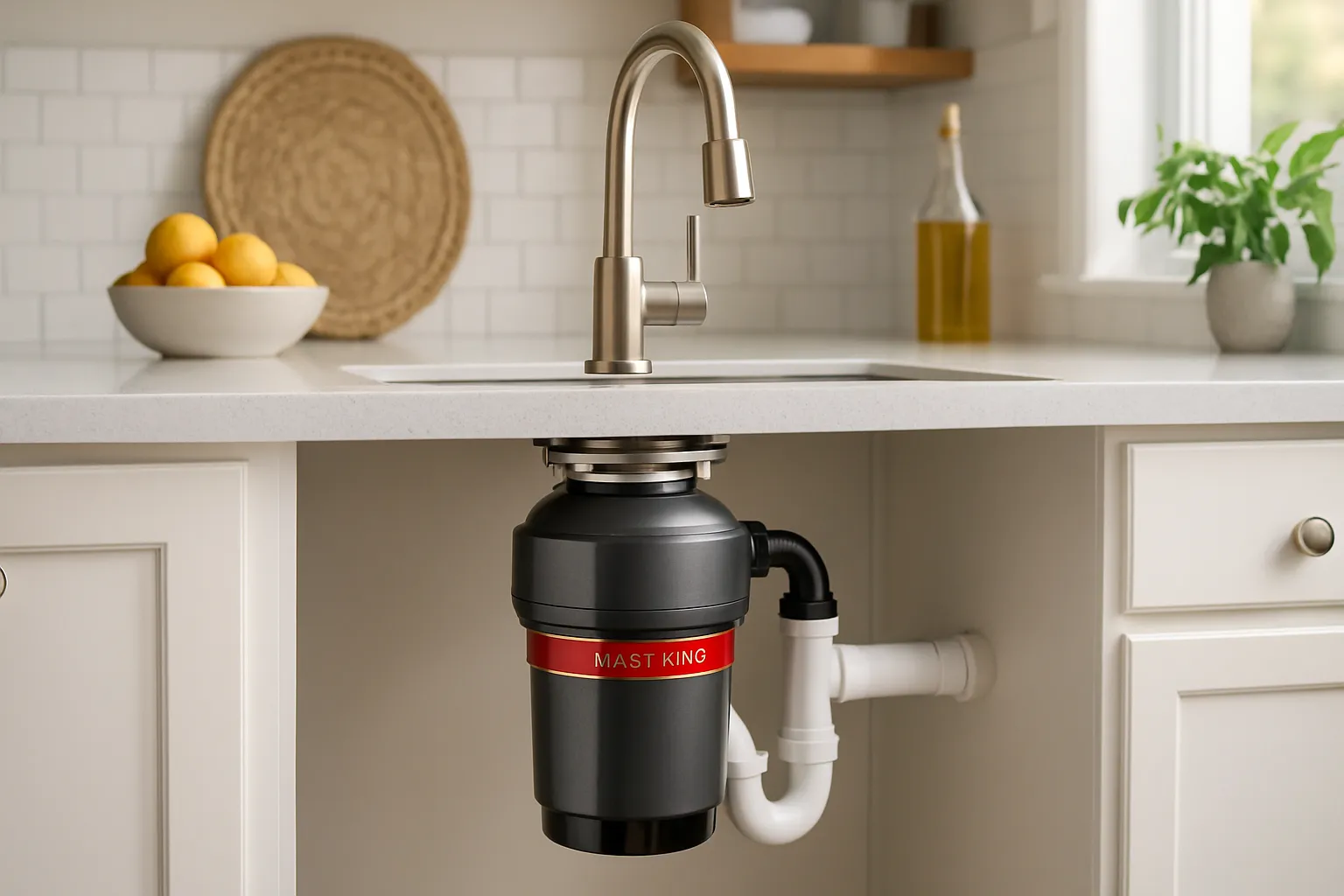
To pick the best food waste disposer for your home, you’ll want to focus on four main areas: motor power (measured in Horsepower, or HP), the feed type (whether it’s continuous or batch feed), the grinding technology (how many grinding stages it has), and the noise level. For a typical British household, a 3/4 HP continuous feed disposer featuring a two-stage grinding system offers an excellent balance of power, ease of use, and value for money. This ensures it can easily handle everyday food scraps without any difficulty.
A food waste disposer, also known as a kitchen garbage disposal or sink waste grinder, is a brilliant gadget for any modern kitchen. It makes tidying up much easier, improves kitchen hygiene by removing the need for smelly bins, and even provides an environmentally friendly alternative to throwing food waste into landfill. But, given the wide variety of models available, it’s important to choose the right one to guarantee a unit that is reliable, quiet, and efficient – something that will serve you well for years ahead. This guide covers everything you need to know to make a confident, informed choice.
Recommended Top Food Waste Disposers 2026
Taking all this advice into account, along with customer reviews and the current market options, we recommend the following food waste disposer models as the best value for money.


- 🔌 High Performance 2800RPM Power: 3/4 HP kitchen garbage disposal with 2800 revolutions per minute quickly crushes food waste, fruit & vegetable scraps to prevent blocked drains and is ideal for UK kitchen sink waste processing.
- 🛡️ Durable Stainless Steel & ABS Build: Premium stainless steel grinding components with corrosion‑resistant ABS housing ensure long lasting, rust proof performance – a robust food waste grinder perfect for household kitchen use.
- ⚙️ Automatic Overload & Safety Protection: Built‑in electronic overload protection stops the motor if bones or hard waste jam the unit, and pneumatic wireless switch offers safer operation and peace of mind for UK homes.

- Suitable for standard kitchen sinks
- Bio shield protection
- Torque master grinding system

- EFFECTIVE WASTE DISPOSAL: The Premium 550 EC waste disposal unit quietly and effectively grinds household food and sink waste in seconds. A cleaner, more convenient alternative to a food caddy.
- SIMPLE INSTALLATION: Thanks to Lift & Latch Technology and rubber grips on the trim shell, the Premium 550 EC fits under most sinks. All you need is adequate plumbing and an accessible power source.
- EASY TO USE: Run the cold water tap and turn on the chrome InSinkErator Air Switch button. There are no knives or blades in the disposer, so you can safely feed in food scraps using your hands.

- 【Powerful Motor】: Our Food Waste Disposer features a 560W pure copper motor, with a speed ranging from 1800 to 3400 revolutions per minute. This 3/4 horsepower garbage disposal can effectively grind various types of food waste, including seafood, shrimp shells, vegetables, fruits, and leftovers. By using our disposer, you can easily manage kitchen waste, keep the drainage pipes clear and odor-free, and prevent blockages.
- 【Large 1.4L Capacity】: The Food Waste Disposal Unit For Sink has an internal capacity of 1400ml, compatible with all kitchen sinks and dishwasher ports. You can connect it directly to the dishwasher, handling food waste while washing dishes, freeing up your hands, significantly improving kitchen cleaning efficiency, and reducing post-cooking cleanup tasks.
- 【Safety Protection】: Our Under Sink Garbage Disposal utilizes an innovative bladeless mechanism to crush food waste at high speed. The touchless pneumatic control switch ensures easy operation while providing additional protection. Equipped with an air switch, it ensures safe and reliable operation. In case of leaks, the system will automatically stop, and it also includes overpressure, overcurrent, and overheat protection features.

- EFFECTIVE WASTE DISPOSAL: Fitted quickly and easily to your kitchen sink, the Standard 460 waste disposal unit effectively grinds household food and sink waste in seconds.
- SIMPLE INSTALLATION: Thanks to Lift & Latch Technology and rubber grips on the trim shell, the Standard 460 fits under most sinks. All you need is adequate plumbing and an accessible power source.
- EASY TO USE: Run the cold water tap and turn on the chrome InSinkErator Air Switch button. There are no knives or blades in the disposer, so you can safely feed food scraps into the plughole using your hands.

- EFFICIENT GRINDING: Our waste disposal unit for sink is equipped with a 560W/1800-3400 rpm pure copper motor with powerful performance and a wide grinding range. It is ideal for seafood, shrimp shells, vegetables, fruit, leftovers, etc., and can easily handle kitchen waste after meals.
- LARGE CAPACITY: Our Food Waste Disposer has an internal capacity of 1200 ml and is compatible with a variety of dishwasher interfaces, making it more convenient to use. It can be connected to a dishwasher to wash dishes and dispose of garbage at the same time, greatly improving the efficiency of kitchen cleaning.
- GOOD DESIGN: Our garbage disposal is well-designed and equipped with air switches to control the machine without direct contact. The bladeless cutting design ensures both efficiency and your safety.

- CONVENIENT DISPOSAL: Fitted discreetly to your kitchen sink, the InSinkErator Model 46AS is the perfect entry level food disposal option for small homes. Discreetly grinding away scraps in seconds. A cleaner alternative to the food waste caddy.
- ULTRA-FINE GRIND: The Model 46AS has a 980 ml grind chamber and uses powerful grind technology to crush most food waste into tiny particles. Fibrous materials such as banana peel are not recommended.
- OVERLOAD PROTECTION: Never worry about jamming your waste disposal unit again. The 46AS overload protection feature ensures you can't overfill the grind chamber. Never dispose of fat, oil, glass, or crockery into the unit.

- Powerful 3-Stage Grinding System: This advanced food waste disposer features a robust 3-stage grinding system and a 560W high-torque motor, effortlessly pulverizing tough food scraps like fruit pits, vegetable peels, and small bones, ensuring your kitchen sink drain remains clear.
- Ultra-Quiet Operation at 45dB: Experience a peaceful kitchen environment. Our kitchen waste disposer incorporates aviation-grade sound insulation cotton and anti-vibration technology to operate at a remarkably low 45dB, making this garbage disposal unit one of the quietest on the market.
- Convenient & Safe Air Switch: Control your sink waste disposal unit safely and easily with the included air switch. This design allows for hygienic operation without direct electrical contact, providing an added layer of safety, especially with wet hands.
What is a Food Waste Disposer and How Does it Work?
A food waste disposer is an electrical appliance installed under your kitchen sink, connected to the drain. Its main job is to shred food waste into tiny pieces—small enough to be safely flushed through your home’s plumbing and into the wastewater system.
Despite what some people might think, kitchen garbage disposals don’t use sharp blades. Instead, they rely on a spinning plate called a turntable, which has small, blunt metal lugs (or impellers). Centrifugal force pushes the food waste against a fixed grind ring fitted with sharp cutting edges. This setup grinds the waste into a fine slurry, which is then rinsed away by cold water. It’s a simple but highly effective way to handle kitchen waste.
How to Choose the Best Food Waste Disposer: A Complete Buying Guide
Choosing a sink waste grinder isn’t just about picking a brand; it’s an investment in your kitchen’s functionality and hygiene. Spending a little time researching now will mean better performance and longer-lasting durability. From my years helping homeowners improve their kitchens, I’ve found that focusing on the core mechanics and build quality—rather than flashy extras—leads to the greatest satisfaction. Let’s examine the key points you should consider to find the perfect fit for your home.
1. Motor Power (Horsepower – HP): The Heart of Your Disposer
The motor is the most critical part of any food waste disposer. Its power, measured in Horsepower (HP), determines what kind of waste it can handle, how finely it can grind it, and how resistant it is to jamming. Many people make the mistake of choosing an underpowered model, which can lead to frustration and plumbing problems later on.
Understanding Horsepower Levels
Disposer motors usually range from 1/3 HP up to over 1 HP. Here’s what each size is best for:
- 1/3 HP: The most basic and budget-friendly option. It’s only suitable for very light use in a one-person household or a small flat where you’ll only dispose of soft scraps. I generally don’t recommend these models, as they tend to struggle with anything tougher and are more prone to blockages.
- 1/2 HP: A noticeable upgrade from 1/3 HP, this size suits small households of 2-3 people with average cooking habits. It can manage most everyday food waste, but may find fibrous vegetables or small chicken bones challenging. It’s workable if your budget is limited.
- 3/4 HP: In my experience, this is the ideal choice for most UK families (3-5 members). A 3/4 HP food waste disposer offers a superb balance between power, performance, and cost. It comfortably handles peelings, fruit pips, small bones, and tougher scraps. Plus, this motor size greatly reduces jam risks and ensures a finer grind, better for your pipes.
- 1 HP and Above: This is the premium range. A 1 HP or 1.25 HP motor delivers enormous grinding power, perfect for larger households, keen home cooks, or anyone wanting the ultimate performance. These disposers pulverise tough stuff like large bones, corn cobs, and avocado stones without strain. If you often entertain guests or want hassle-free top-tier performance, this is the power level to opt for. Stronger motors generally mean more durable appliances.
A useful tip is to consider your future plans. If you’re a couple now but intend to have children, investing in a 3/4 HP model from the beginning is a wiser, long-term choice. This extra power will ensure your sink waste grinder never struggles.
2. Continuous Feed vs. Batch Feed: Which is Right for You?
Food waste disposers come in two main types: continuous feed and batch feed. Your decision depends on what you value most—convenience, safety, or cost.
Continuous Feed Models
These are by far the most popular and widely available disposers. You turn them on via a wall switch or a countertop air switch, and can keep adding food scraps while the motor is running and cold water is flowing.
Pros:
- Quick and Easy: Great for disposing of large amounts of waste fast, such as after cooking a big meal.
- Hygienic: No need to touch a dirty stopper.
- Variety: Far more models to choose from.
Cons:
- Safety Concerns: The opening is exposed during operation, so there’s a risk of cutlery or fingers accidentally falling in—something to think about if you have young children.
- Needs a Separate Switch: An activation switch is required, which might mean paying an electrician to install one.
Batch Feed Models
These work differently. They only operate when you place a special magnetic stopper into the drain and twist it. You load the chamber first, then put the stopper in to start the motor.
Pros:
- Safer: The unit won’t run unless the opening’s covered, making it the safest choice—perfect for families with small children.
- No Extra Switch Needed: Activation is built into the stopper itself, so no wiring is required.
Cons:
- Slower Process: Only one ‘batch’ can be processed at a time, which can be awkward for large amounts of waste.
- Fewer Options and Somewhat Pricier: Less common on the market and occasionally more expensive.
For most people, the quick convenience of a continuous feed model wins. But if safety is your absolute priority, a batch feed disposer is unbeatable.
3. Grinding Technology: From Basic to Bone-Crushing
The quality and complexity of a disposer’s grinding system separate entry-level from high-performance models. It’s what happens inside the grind chamber that decides how fine the particles are and how well your pipes are protected.
Grind Chamber Materials
One important factor is the material used for the grinding parts like the turntable and grind ring. Always choose a food waste disposer with stainless steel grinding components. Cheaper models may use galvanised steel, which can rust and corrode, cutting the unit’s lifespan and reducing grinding power. Stainless steel ensures long-lasting durability and consistent performance, which is essential.
Grinding Stages
The number of grinding ‘stages’ tells you how many times the food waste is broken down before leaving the unit. More stages mean finer particles and less chance of clogged drains.
- Single-Stage Grinding: Usually found on entry-level disposers. Food waste is ground once against the grind ring before being washed away. This is fine for soft scraps but may leave coarser particles from harder food.
- Two-Stage Grinding (MultiGrind): Common in mid-range and high-end models. After the initial grind, the waste goes through another grinding process, producing finer particles. This greatly reduces clog risk and lets the disposer handle a wider range of food, like fibrous vegetables.
- Three-Stage Grinding (or More): Found in premium models. There’s an extra cutting or shearing stage that essentially liquefies the waste, even crushing tough items like chicken bones into a fine slurry that passes easily through pipes. If you want the best, most clog-free performance, pick a three-stage system.
For long-term peace of mind, a disposer with at least two-stage grinding technology is highly recommended. It’s worth the investment for your plumbing and stress-free use.
4. Noise Levels and Quiet Operation: Keeping Your Kitchen Peaceful
Older disposers were notoriously noisy, but advances in technology have led to much quieter models. Given that a noisy kitchen can be quite stressful, it’s worth considering how quiet your unit will be.
Manufacturers use various noise-reduction methods:
- Sound Insulation Shells: More expensive models have a layer of sound-dampening material wrapped around the unit. The better the insulation, the quieter the disposer.
- Anti-Vibration Mounts: Special mounts reduce vibration transmission to the sink, reducing noise.
- Motor Type: Modern induction motors run more quietly and smoothly than older high-speed universal motors.
When shopping, look out for terms like ‘SoundSeal’, ‘Quiet-Collar’, or ‘Sound-Insulated’. Specific decibel levels aren’t always given, but descriptions and user reviews will give a good idea. A strong motor doesn’t have to be loud; many premium models combine power with quiet performance.
5. Size, Space, and Installation: Will it Fit Under Your Sink?
This practical step is often overlooked. Before you buy a food waste disposer, measure the space under your sink carefully. A powerful, quiet unit is no use if it won’t fit.
Check these measurements:
- Height: From the bottom of the sink to the cabinet floor.
- Width and Depth: More powerful disposers tend to be bigger. Make sure there’s enough room for plumbing and to access the unit in future.
- Plumbing Alignment: Check how the outlet of the disposer lines up with your existing P-trap and waste pipe. You may need some adaptors—you can usually find these at DIY stores.
Most disposers fit a standard 90mm (3.5-inch) sink opening common in the UK. Installation is often simplified by ‘quick-lock’ or 3-bolt mounting systems. Confident DIYers can often fit these units in a weekend. But if you’re unsure about plumbing or wiring (needed for continuous feed switches), it’s wise to hire a professional plumber to do the job safely and properly.
6. Build Quality, Materials, and Durability: An Investment for Years
A sink waste grinder works hard, so its durability depends on good build quality. Look for signs of reliable construction to ensure long-term value.
- Grinding Components: Stainless steel is essential for all food-contact parts.
- Grind Chamber: Should be stainless steel or a high-quality corrosion-resistant polymer. Avoid cheap plastic or metal chambers that can crack or rust.
- Warranty: A manufacturer’s warranty reflects their confidence in the product. Budget units may have 1-2 year warranties, while good quality disposers often come with 5-10 years. Top-level models sometimes offer a lifetime ‘in-home service’ warranty. Longer warranties indicate better build quality.
Spending a bit more upfront for a sturdy, well-built food waste disposer with a long warranty will almost always save you money and trouble in the long run, avoiding early repairs or replacements.
7. Features that Enhance Hygiene and Ease of Use
Besides the main mechanics, some extra features can make your daily experience better, particularly regarding hygiene and maintenance.
- Antimicrobial Protection: Some models have antimicrobial agents embedded in the grind chamber parts to reduce odour-causing bacteria, keeping your sink fresher.
- Removable Splash Guard: The rubber baffle in the drain, called a splash guard, stops food and water splashing back. It can get grimy, but models with a removable guard make cleaning much easier, improving sink hygiene.
- Auto-Reverse Function: Higher-end disposers can detect jams and automatically reverse the motor briefly to clear blockages. This is great for preventing serious clogs.
- Jam-Buster Wrench: Most units come with a small Allen key-style tool to manually turn the motor from underneath and free stubborn jams. Make sure your chosen model includes one.
8. Environmental Considerations & Council Rules
Many people wonder if a food waste disposer is environmentally responsible. The answer increasingly is ‘yes’. By diverting food waste from landfill, you reduce methane—a potent greenhouse gas. The food waste sent down the sink goes to wastewater treatment plants, where it’s often processed to create biogas (renewable energy) and fertiliser.
That said, if you live in the UK, it’s important to check with your local council and water authority before buying and fitting a sink waste grinder. While these disposers are legal in most places, some councils or areas with older sewage systems may have restrictions. A quick look at your council’s website or a phone call will clarify this. Being a responsible owner means checking these details before purchase.
Conclusion
Choosing the right food waste disposer comes down to a few key decisions based on your household’s needs. Aim for a powerful motor—3/4 HP is ideal for most families—and a multi-stage grinding system to ensure efficient, clog-free operation. Then consider whether you prefer the ease of a continuous feed model or the safety of a batch feed. Don’t forget to look for features that promote quiet operation and good hygiene.
With a little research, focusing on durable materials like stainless steel and a strong warranty, you can find a sink waste grinder that feels less like an appliance and more like an essential part of a modern, clean kitchen. Measure your space, check local rules, and you’ll be ready to pick a model that will give great value for years. Explore our top-rated models from 2026 and find the perfect one for your home.
Frequently Asked Questions (FAQ)
Can I put any type of food down a food waste disposer?
No, you shouldn’t put everything down a food waste disposer. Even powerful models have limits. To avoid jamming or damage, stay clear of these items:
Grease, Oil, and Fats: These liquids can solidify in your pipes and cause serious blockages.
Fibrous Vegetables: Celery, asparagus, corn husks, and artichokes have long, tough fibres that can wrap around the motor.
Expandable Foods: Pasta, rice, and bread swell with water and can form pasty clogs.
Hard Materials: Large bones, fruit pits (like peaches and avocados), shells (oysters, clams), or non-food items like glass or plastic should never go in.
Coffee Grounds: Small amounts are fine, but large quantities can build up and cause blockages.
Always run a strong flow of cold water when the kitchen garbage disposal is on, and keep it running for 20-30 seconds after you finish.
Are food waste disposers legal in the UK?
Yes, generally speaking food waste disposers are legal to own and install in the UK. They are widely seen as an environmentally friendly way to divert food waste from landfill. However, legality can depend on your specific area.
Some local councils or water authorities may have regulations—especially in places with older or sensitive sewage systems. It’s best to check your council’s website or contact them directly before buying and installing a sink waste grinder to ensure you’re fully compliant.
How do I clean my sink waste grinder?
Keeping your disposer clean is key to good performance and hygiene. A simple weekly routine is to grind a tray of ice cubes which helps scrape away grease and residue. For a deeper clean and to freshen the unit, you can follow this process:
1. Grind some citrus peels (lemon, orange, or lime) to deodorise the chamber.
2. Turn off the disposer. Pour half a cup of baking soda into the chamber, then add a cup of white vinegar. Let it fizz and sit for 10-15 minutes.
3. Turn on the cold tap and disposer for about 30 seconds to rinse everything through.
If your disposer has a removable splash guard, take it out and wash it separately with soap and water.
How much does it cost to run a food waste disposer?
The running costs of a modern food waste disposer are very low. Most units only run for a couple of minutes a day at most. Electricity usage usually costs just a few pounds per year. Water consumption is minimal, needing only a steady flow of cold water when running. Compared to buying bin liners and dealing with smelly rubbish, a kitchen garbage disposal is a very economical appliance over time.
Will a food waste disposer block my drains?
When used correctly, a good quality food waste disposer is very unlikely to block your drains. It can actually help keep pipes clean by flushing fine particles through. Blockages usually happen because of user error or an unsuitable machine.
To avoid blockages, always use plenty of cold water, don’t put in forbidden items (like grease or fibrous vegetables), and choose a disposer with enough motor power and multi-stage grinding technology. The finer the particles it produces, the less chance you have of problems.
Informative video

Last update on 2025-12-04 / Affiliate links / Images from Amazon Product Advertising API
This product presentation was made with AAWP plugin.