How do you choose the best smart kitchen composter in 2026? What properties and features should the best smart kitchen composter have to suit your needs? Read our guide and make an informed choice.
Your Quick Guide to the Best Smart Kitchen Composter
Choosing the best smart kitchen composter for your home involves focusing on four key areas: capacity, odour control, energy consumption, and the quality of the end product. The ideal automatic food composter should be large enough for your household’s daily food waste, feature a robust, multi-stage filtration system for completely odorless composting, and operate efficiently to keep running costs low.
A smart kitchen composter is a revolutionary appliance designed for modern, eco-conscious households. It transforms food scraps—from vegetable peelings to chicken bones—into a dry, nutrient-rich soil amendment in a matter of hours, a process that takes months in a traditional garden compost heap.
This makes it perfect for anyone looking to reduce their household waste, eliminate smelly kitchen bins, and create valuable fertiliser for their plants, all without the need for a garden. Selecting the right countertop composter is crucial to ensure it fits seamlessly into your lifestyle, offering convenience rather than becoming a cumbersome chore.
Recommended Top Smart Kitchen Composters 2026
Considering the guidance provided, coupled with buyer feedback and the options on the market, we suggest these models of Smart Kitchen Composters as top choices for cost-effectiveness.
-
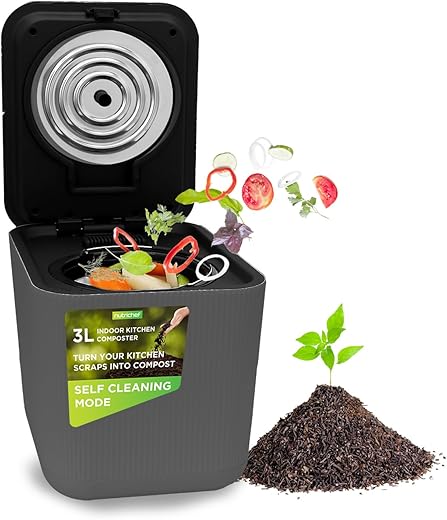
Transform kitchen waste into a convenient, compact solution with the Nutrichef 3L Electric Kitchen Composter. Designed for modern kitchens, this electric composter helps manage scraps at the source, making waste handling cleaner and easier.
Key Features
- Efficient 3 litre capacity – ideal for small to medium households
- Compact footprint fits on most kitchen counters
- Durable polypropylene construction for long-lasting use
- Electric operation to speed up the composting process
- Sturdy build with a balanced blend of weight and portability
Specifications
- Capacity: 3 litres
- Product Dimensions: 27.99 x 34.29 x 31.75 cm
- Weight: 8.23 kg
- Material: Polypropylene
- Part Number: NCVK9112BGR
- Model Number: NCVK9112BGR
- Manufacturer: Sound Around
- ASIN: B0CRSNCNZL
- Date First Available: 12 Jan 2024
Product Details
- Brand: Nutrichef (by Sound Around)
- Model: NCVK9112BGR
- Intended Use: Electric kitchen composter designed to streamline the handling of food scraps and reduce kitchen waste
If you’re seeking a compact, electric solution to manage compostable waste at home, the Nutrichef 3L Electric Kitchen Composter offers a practical balance of capacity, durability, and convenience for everyday kitchen use.
-

- 【Advanced Activated Carbon Filters】 This kitchen electric composter is equipped with 2 upgraded activated carbon filters, effectively keeping your kitchen fresh and scentless between composting cycles. Moreover, the filters are easy to take out and replace for maintenance. Display flashing also remind you to replace the activated carbon (recommended every 3 months).
- 【High Capacity Composting】 Capable of handling up to 4 L of daily kitchen waste, the compost bin impressively reduces food waste by 90% in 4-6 hours, turning your food waste into renewable energy and fertilizer.
- 【Enhanced Mixing System】 The quick composting machine is equipped with large blades for efficient food waste processing. The system dries, finely grinds, and cools kitchen waste and food scraps, converting them into valuable fertilizer, further streamlining the composting process.
- 【User-Friendly Interface】 The food waste compost bin comes with a clear control panel that displays the composting process for easy operation. Features include a self-weighing function, filter replacement indicator, and adjustable timers with auto (4/5/6 hours dependent on waste weight) and manual (1/2/3 hours) modes, catering to different user needs.
- 【Easy Cleaning and Maintenance】 Featuring a one-click self-cleaning mode, this composter frees your hands, maintaining hygiene easily (Note: Please add clear water into the bucket before). It can not only solve kitchen waste but also minimize your carbon footprint and there is no more smelly garbage.
-

- 🌱Smart Electric Composter for the Kitchen: The ultimate solution for turning food scraps and waste into nutrient-rich, natural fertilizer! Ouaken compact electric composter allows you to reduce waste, save on disposal costs, and minimize your carbon footprint—all while enriching your garden.
- ♻️Efficient Waste Reduction: Using high-temperature drying, grinding, and cooling methods, this kitchen composter reduces waste by up to 90% within 3 hours. Its low-speed, high-torque blades easily process most food materials, while operating at a quiet noise level below 40dba, so you can start it even at night.
- 🍃Odor-Free Composting: Ouaken indoor electric composter equips a large capacity carbon filter that effectively eliminates odors during the composting process, keeping your kitchen smelling fresh. Once the filter reaches its 1000-hour usage limit, the composter will alert you to replace it, ensuring continued odor-free performance.
- 🎁Large yet Compact: With a 4L capacity, this electric kitchen composter is perfect for a family’s daily food waste. Its compact, sleek design fits neatly on your kitchen countertop without taking up too much space, making it an ideal addition to any modern kitchen. Enjoy composting without compromising convenience.
- 🔄Easy to Use & Maintain: The easy-touch interface and transparent lid make starting, stopping, and monitoring the composting process a breeze. Choose from Crush, Ferment, or Clean modes for efficient composting or auto-cleaning—just press a button to get started. Not enough? The detachable bucket is also dishwasher safe.
- 🥇Pro Tips for Composting: Crush Mode is more about reducing waste volume and odor with low energy usage, and Ferment Mode focuses on creating high-quality compost/fertilizer through an accelerated fermentation process. Start the machine and choose your prefered options to make the perfect compost!
-

- Safe Ceramic Coating Crafted from natural minerals, the ceramic-coated inner bucket is PFAS & PFOA free, heat-resistant, and long-lasting. Unlike Teflon coatings that may peel over time, ceramic ensures a safer and healthier composting process for you and your plants.
- Visible Glass Lid The transparent lid allows you to monitor the entire process at a glance—no need to open the machine. Track progress easily while keeping operation clean and sealed.
- Quick Disposal Mode (4–6h) Reduce food waste volume by up to 90% in just 4–6 hours. This fast drying and dehydration cycle eliminates odors and produces lightweight, storable waste that can be sprinkled on lawns or saved for further composting.
- Composting Mode (24h) Turn everyday scraps into nutrient-rich organic compost within 24 hours. Ideal for potted plants and garden beds, the biological fermentation process creates natural fertiliser that nourishes your soil.
- Smart Usage Tips For best results, use Disposal Mode first to dry and store waste, then switch to Composting Mode for microbial fermentation. Cut fibrous waste into smaller pieces and avoid hard objects (see product images for guidelines).
-

- WORLD’S FIRST SMART WASTE COMPOSTER: Lomi is the ultimate kitchen appliance for turning food & waste into nutrient-rich compost.
- EASY INDOOR USE: Lomi is electric and designed for indoor use, making it easy to compost food scraps on your countertop.
- COMPOST IN UNDER 4 HOURS: Lomi uses advanced technology to break down food waste quickly and efficiently, producing compost in as little as 4 hours.
- EASY TO USE: Lomi has a simple touch interface that allows you to start, stop, and monitor the composting process. Each Lomi Bundle includes your first 45 cycles of filters & pods!
- COMPACT SIZE: Lomi is the perfect addition to any kitchen, allowing you to reduce your waste and feed your garden with ease. Dimensions: 12″ tall, 16″ wide, 13″ deep
-

- SUPERIOR COMPOSTING CAPACITY: This smart compost bin can process up to 4 liters of kitchen waste per day and reduces the volume of food waste by up to 90% in just 4 to 6 hours, converting your waste into a valuable source of energy and fertilizer.
- SAY GOODBYE TO BAD ODORS: Equipped with 2 improved activated carbon filters, our electric kitchen composter ensures an odor-free environment, even between composting cycles. The filters are easily replaceable and changing the filters every three months is recommended.
- ADVANCED MIXING SYSTEM: With large blades of the composting machine, the improved system optimizes the composting process by drying, crushing and cooling food residues to turn them into rich and useful fertilizers and greatly accelerate compostability.
- INTUITIVE AND USER-FRIENDLY INTERFACE: With its clear control panel showing the compost status, this odourless composter is designed to be user-friendly. It includes functions such as a weighing system, a filter replacement indicator, an adjustable timer with auto-tailored modes for waste weight (4/5/6 hours) and manual modes (1/2/3 hours) for more needs.
- EASY CLEANING & MINIMAL MAINTENANCE: Enjoy a one-click automatic cleaning mode that only requires water to start the cycle. This food waste compost machine not only enables efficient waste management, but also reduces the ecological footprint of the household.
-
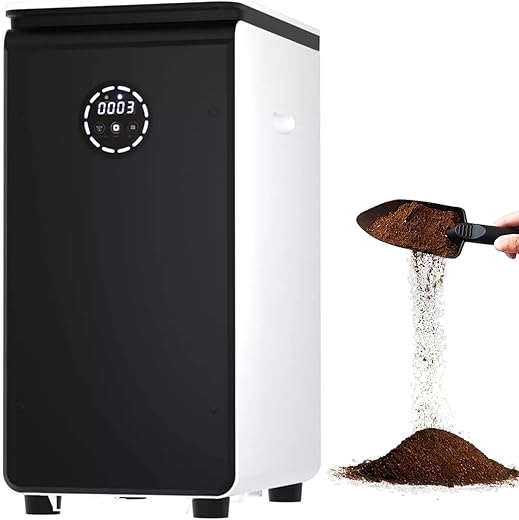
- World’s First Real Bio Waste Composter – GEME Electric Composter, Real Composting,Instead of dehydrated waste, GEME Kitchen Composter is designed to break down your food waste with microbial degradation tech in just 6-8 hours and eventually convert it into rich, organic compost.
- Keep Throwing Garbage, GEME Take Care of the Rest – unlike grinding process or high-temperature dehydration,GEME composter ensure you add waste at anytime, No need to push buttons, No need to wait cycles, Zero learning curve, Just like regular trash bin.
- No Need to Change Filter – The world’s only model that uses the most advanced industrial filter, with metal ion catalytic oxidation purification.This technology is powerful and requires NO REPLACEMENT at all. Other “composter” needs to replace filter every 3 months, large hidden cost!
- 19 L Large Capacity – GEME Electric Composter for Kitchen with 19 L Volume, up to 5 kg daily processing capacity. Suggest 10+ people family daily using and 3+ months no cleaning required, Worth the price for such a big guy. Item dimensions: 45.5x32x66.5(cm) 18×12.6×26.2 (inch).
- No Embarrassing Odors Compost Bin – Built-in industrial grade deodorization system, without grinding process or high-temperature dehydration, GEME Composter equipped with innovative microbes based garbage disposal, work quickly and safely.
- The Original Food Recycler, 95% Reduction Rate, Transform Waste Peace of Mind- GEME Composter indoor Electric, reduce food waste by 95%. No need to clean the bin after each use, the only thing you need to do is to fill the smart bin with food waste.
-
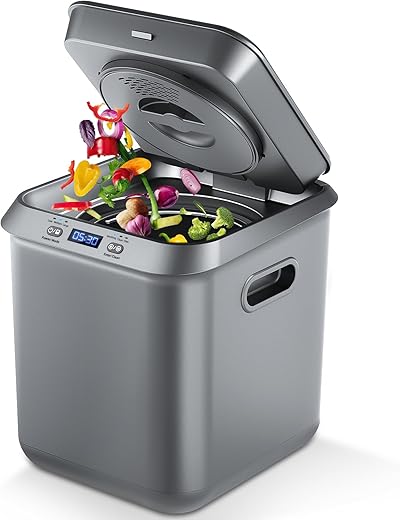
- Eco-Friendly & Save Costs : This Countertop Composter reduces food waste by turning it into natural fertilizer, which can recycle food scraps into nutrient-rich soil sustainably. Save on disposal costs, and minimize your carbon footprint—all while enriching your garden.
- Reduce Waste by 90%: Using high-temperature drying, grinding, and cooling methods, this kitchen composter can reduce waste by up to 90% within 3 hours. Its low-speed, high-torque blades easily process food materials like chicken bones, while generating little to no noise (
- Mixing System with 3D Grinding Blade: Our composter’s advanced mixing system with drying – grinding, which ensures even breakdown of waste, speeding up composting and delivering nutrient-rich soil effortlessly.
- Odor-free: This composter features an activated carbon filter system, ensuring odor-free operation while breaking down food waste. Perfect for indoor use, it keeps your kitchen fresh and clean! The carbon box can be replaced to ensure sustainable use.
- Auto-clean: The composter is equipped with an auto-clean function, a button to clean after use, reducing cleaning and saving your time. Simply add water and turn on the auto-clean function to clean the residue left behind by the food waste machine.
- Compact size: The kitchen composter is compact in size and exquisite in appearance, you can put the composter bin anywhere. The compact compost is easy to use and is the best composter for your kitchen counter.


What is a Smart Kitchen Composter and How Does it Work?
A smart kitchen composter, often called an automatic food composter or a countertop composter, is a compact electrical appliance that sits on your kitchen worktop. Its primary function is to rapidly break down and dehydrate food waste, significantly reducing its volume and turning it into a dry, stable, and nutrient-dense material.
Unlike traditional composting which relies on slow microbial decomposition over months, a smart kitchen composter uses a three-stage process of drying, grinding, and cooling. First, it heats the food scraps to sterilise them and evaporate all moisture.


Then, powerful blades grind the dried material into a fine, unrecognisable powder. Finally, a cooling cycle stabilises the output, resulting in a product ready for your plants or garden in as little as four to eight hours. This quick processing is a key advantage over other methods.
How to Choose the Best Smart Kitchen Composter: A Complete Buying Guide
Navigating the world of automatic food composters can feel a bit daunting at first. With various technologies, sizes, and price points, how do you pinpoint the one that’s a perfect match for your home?
As someone who has tested and reviewed countless kitchen gadgets, I can tell you that the best smart kitchen composter is the one you’ll actually use consistently. It needs to be effective, convenient, and cost-efficient.
This guide will walk you through every critical factor to consider. We’ll delve into the nuances that separate an excellent countertop composter from a mediocre one, focusing on the practical considerations that matter to a pragmatic British household.
Think long-term value, reliability, and day-to-day usability. Let’s find the right model for you.
1. Capacity and Physical Footprint
The first question you must ask yourself is: how much food waste does my household produce, and where will this appliance live? Getting this wrong is a common pitfall that can lead to frustration.
Understanding Litre Capacity
The capacity of a smart kitchen composter is measured in litres (L). This refers to the volume of the internal bucket where you place your food scraps.
Most models on the market range from 2L to 5L. To put this into perspective:
- 2L – 2.5L Models: These are ideal for individuals, couples, or small families who cook moderately. A countertop composter of this size typically handles the daily scraps from preparing a few meals without issue and is a great choice if you’re tight on space.
- 3L – 5L Models: Best suited for larger families (4+ people) or those who cook frequently and generate a lot of vegetable peelings, fruit cores, and other organic waste. If you find your food caddy for kerbside collection is always overflowing, a larger capacity automatic food composter is likely the better investment.
In my experience, it’s often wiser to size up slightly if you’re unsure. Running a half-empty cycle is perfectly fine, but having an overflowing bucket on a Sunday evening after a big roast dinner is an inconvenience you want to avoid.
A larger smart kitchen composter might mean you only need to run a cycle every two days instead of daily, which can also save on energy.
Evaluating the Compact Design and Dimensions
While capacity refers to the inside, the external dimensions determine if the unit will fit in your kitchen. This is where the term countertop composter can be a little misleading. While they are designed for the kitchen, their size is often comparable to a large bread maker or a premium coffee machine.
Before you even think about purchasing, grab a tape measure and measure the intended spot on your worktop. Pay close attention to the height available underneath your upper cabinets as many a smart kitchen composter has been returned because the lid couldn’t open fully.
Also, consider its placement in relation to a power socket and ventilation. While they are designed for odorless composting, you still want good air circulation around the machine.
The aesthetic and compact design are also important. Brands now offer these appliances in various colours and finishes—from sleek stainless steel to matte white or black—to better match modern kitchen decor. A well-designed automatic food composter should blend in, not stick out like a sore thumb.
2. Processing Method and Cycle Time
The magic of a smart kitchen composter is its speed. Understanding how it achieves this quick processing helps you appreciate the technology and choose a model that suits your needs.
Drying, Grinding, and Cooling: The Core Process
Virtually all electric composters use a variation of this three-stage process. First is drying, then grinding, and finally cooling. Each stage plays a vital role in producing a safe, stable end product.
- Drying: A heating element raises the temperature inside the chamber, typically to around 70-80°C. This serves two purposes: it sterilises the waste, killing pathogens like E. coli or salmonella, and it evaporates the water content, which can be up to 90% of the weight of food scraps.
- Grinding: Once the waste is dry and brittle, internal blades or grinders automatically engage. They pulverise the material into a fine, consistent powder and the power of the motor and the design of the blades determine how well the machine can handle tougher items like chicken bones, corn cobs, or fruit pits.
- Cooling: After the grinding phase, the machine initiates a cooling cycle. This brings the processed material back to room temperature, making it safe to handle immediately. This final step is crucial for convenience.
This entire cycle, from start to finish, is what defines the quick processing time. Most models complete a full cycle in 4 to 8 hours. Some advanced units offer multiple modes—a shorter, faster cycle for light vegetable waste and a longer, more powerful cycle for mixed or tougher scraps.
An appealing feature of a quality automatic food composter is its ‘set-and-forget’ nature; you load it, press a button, and can even run it overnight.
Microorganism-Based Models: A Different Approach
A less common but noteworthy alternative uses a combination of heating and specialised microorganisms or ‘composting accelerators’. These models operate at a lower temperature over a longer period (often 24-48 hours) to create a more biologically active end product. While slower, the output from this type of smart kitchen composter is closer to traditional, mature compost.
However, they often require you to periodically add microbial starters or pellets, which is an ongoing cost to factor in.
3. Odour Control and Filtration System
For a pragmatic consumer, perhaps the most critical feature of a countertop composter is its ability to operate without creating unpleasant smells. The promise of odorless composting inside your home is the main selling point, and the technology behind it is what you’re paying a premium for.
The Role of Carbon Filters
The primary defence against smells is an activated carbon filter system. As the composter heats and dries the food waste, it releases vapours and gases which are channelled through one or more carbon filters before being vented out of the machine. Activated carbon has a highly porous structure with a vast surface area, allowing it to effectively trap and neutralise volatile organic compounds (VOCs)—the molecules responsible for bad smells.
What to Look for in a Filtration System
When evaluating a smart kitchen composter, don’t just check if it has a filter; look at the specifics. Not all filters are equal and the differences matter for ongoing performance and cost.
- Filter Size and Lifespan: A larger, thicker filter will generally be more effective and last longer. Manufacturers provide an estimated lifespan, usually measured in months or a certain number of cycles (e.g., 3-6 months or 500 hours of use). Check the replacement cost of these filters as this is a recurring expense to factor into the total cost of ownership.
- Dual-Filter Systems: Premium models often feature a dual-filter system for superior odorless composting. One filter might be positioned to handle the main processing chamber, while a second one ‘polishes’ the air just before it’s released, providing an extra layer of security against any escaping odours.
- Airtight Lids: The effectiveness of the filter is partly dependent on the seal of the main lid. Look for models with a sturdy, locking lid and a high-quality rubber or silicone gasket. This ensures that all odorous air is forced through the filtration system and doesn’t leak out from the sides.
From my experience testing different units, a flimsy lid is a major red flag for potential odour problems. A well-engineered automatic food composter should be virtually smell-free during operation.
You might notice a faint, earthy or baked smell, similar to bread baking, but it should never be unpleasant or smell like rotting food.

4. Energy Consumption and Running Costs
The pragmatic British consumer is always thinking about the long-term running costs. An appliance that runs for several hours a day can have a noticeable impact on your electricity bill, so understanding the energy consumption of a smart kitchen composter is essential.
Watts, kWh, and Calculating the Cost
The power of the appliance is measured in Watts (W). However, the key figure for calculating cost is kilowatt-hours (kWh), which is the energy used over time. A typical countertop composter might have a power rating of 500-750W.
It doesn’t draw this peak power for the entire cycle; the heating phase is the most energy-intensive, while the grinding and cooling phases use significantly less. Most manufacturers state the average energy consumption per cycle, which is usually between 0.5 kWh and 1.5 kWh.
Cost per Cycle = Energy per Cycle (kWh) x Your Electricity Price (pence per kWh)
For example, if a cycle uses 1 kWh and your electricity tariff is 30p/kWh, then each cycle costs 30 pence. If you run it daily, that’s approximately £9 per month. A more efficient automatic food composter using 0.6 kWh per cycle would cost just £5.40 per month. Over a year, the savings from choosing a more efficient model can be substantial, easily justifying a slightly higher initial purchase price.
Energy-Saving Features
Look for models with smart sensors. Some advanced units have moisture sensors that can adjust the cycle time automatically. If you put in a relatively dry load (like bread crusts and vegetable peelings), the sensor will detect this and shorten the heating phase, saving energy.
This is a far more efficient system than a fixed-cycle timer and a key feature of a truly ‘smart’ smart kitchen composter. Running the appliance overnight on an Economy 7 or similar off-peak electricity tariff is another excellent strategy to minimise running costs.
5. Noise Level
In today’s open-plan living spaces, the noise an appliance makes can be a deal-breaker. A smart kitchen composter is not a silent appliance, but its noise level should be manageable.
The noise is generated during two phases. The drying phase produces a gentle hum while the grinding phase is louder but brief.
- Drying Phase: During this stage, you’ll hear the gentle hum of a fan, similar to a modern oven or an air purifier. This is generally very quiet and unobtrusive.
- Grinding Phase: This is the loudest part of the cycle. The motor and blades engage to crush the dried material. The sound can be compared to a coffee grinder or a blender running on a low setting, but it is usually very short, lasting only for a few minutes in total, often in short bursts.
Manufacturers measure noise in decibels (dB). A quiet library is around 40 dB, and a normal conversation is about 60 dB. Most countertop composters operate at around 40-50 dB during the drying phase and may spike to 60-65 dB during the brief grinding moments.
In my testing, I’ve found that any automatic food composter rated below 50 dB on average is exceptionally quiet and won’t be a nuisance, even in a small flat. If you plan to run it overnight, this is an especially important consideration.
6. Ease of Use and Maintenance
For an appliance to become part of your daily routine, it must be exceptionally easy to use and maintain. A complicated or messy countertop composter will quickly become an expensive kitchen ornament.
Simple Operation
The best models have a one-touch operation. You fill the bucket, close the lid, and press a single button. The machine should handle the rest, with clear indicator lights to show what stage of the process it’s in (e.g., ‘Drying’, ‘Grinding’, ‘Cooling’).
Some smart models with app connectivity might offer more options, but the core function should always be simple.
Cleaning and Maintenance
This is a make-or-break factor. Look for a smart kitchen composter with a removable, dishwasher-safe bucket. Being able to simply lift out the bucket, empty the finished product, and place it in the dishwasher for a thorough clean is the gold standard for convenience.
Buckets with a high-quality non-stick coating are also a huge plus, as they prevent food from baking onto the surface, making them easier to wipe clean even if you don’t have a dishwasher. A common mistake I see is users neglecting to clean the bucket regularly, which can lead to residue build-up and affect performance over time. A quick rinse after each cycle is a good habit to get into.
The only other regular maintenance is changing the carbon filters. This should be a tool-free, simple process of unclipping a cover, swapping the old filter for a new one, and closing it back up. A well-designed automatic food composter will make this a 30-second job.
7. The Final Product: What Do You Get?
After a few hours, your smart kitchen composter presents you with a finished product. But what is it, and what can you do with it?
The output is a dry, sterile, finely-ground powder that is rich in nutrients like nitrogen and potassium. It is technically a ‘pre-compost’ or ‘soil amendment’ rather than a living, microbially-rich compost because it has been sterilised by heat and therefore lacks the beneficial microorganisms of traditional compost.
However, it is an incredibly valuable resource. You can:
- Mix it into potting soil for house plants: A great way to boost the nutrient content for your indoor greenery. A general rule of thumb is to mix it in at a ratio of 1 part amendment to 10 parts soil.
- Sprinkle it on your lawn: It acts as a slow-release natural fertiliser.
- Work it into your garden beds: When mixed into garden soil, soil microbes will colonise it, breaking it down further and releasing its nutrients for your plants.
- Add it to a traditional compost bin: It acts as a fantastic ‘brown’ material, accelerating the decomposition process of your main compost heap.
The quality of the final product from a good automatic food composter should be consistently fine, dry, and free-flowing. It should have a mild, earthy scent, not a sour or unpleasant one.

8. Build Quality, Warranty, and Brand Reputation
A smart kitchen composter is a significant investment, often costing several hundred pounds. You want it to be a reliable workhorse for years to come.
Assess the build quality by looking at the materials used. A robust metal casing is preferable to flimsy plastic. Check the feel of the lid, the handle on the bucket, and the responsiveness of the buttons.
The warranty is a direct indicator of the manufacturer’s confidence in their product. A standard 1-year warranty is the minimum you should accept. A 2 or 3-year warranty is a sign of a superior product and offers excellent peace of mind.
Also, check the availability of customer support in the UK. Being able to talk to someone or easily order replacement parts like filters is crucial for long-term ownership of any smart kitchen composter.
Finally, do your research on the brand. Read reviews, not just on the seller’s website but on independent forums and consumer sites. A brand with a long history of making reliable kitchen appliances is often a safer bet than an unknown entity. This due diligence ensures your investment in an eco-friendly lifestyle is a lasting one.
Conclusion
Choosing the best smart kitchen composter is a balancing act between your household’s needs, your kitchen’s space, and your budget. By focusing on the core fundamentals—adequate capacity, excellent odorless composting capabilities, low energy use, and ease of maintenance—you can find a model that provides genuine value.
Remember to consider the long-term running costs, such as electricity and replacement filters, as these are just as important as the initial purchase price for the pragmatic consumer. Ultimately, the right automatic food composter is a powerful tool. It empowers you to drastically reduce your landfill waste, eliminate kitchen bin odours, and create a valuable resource for your plants and garden.
It’s an investment in a cleaner, more sustainable, and more convenient home. Take your time, use this guide to evaluate your options, and you’ll make a choice that you’ll be happy with for years to come.
Frequently Asked Questions (FAQ) Smart Kitchen Composter
Here are answers to some of the most common questions about these innovative appliances to help you make a confident decision.
Do smart kitchen composters actually smell?
A high-quality smart kitchen composter with a proper filtration system does not smell during operation. Utilising activated carbon filters and sealed lids, they are designed for completely odorless composting. You might notice a very faint, pleasant, baked or earthy aroma, but it will not smell like food waste.
How much electricity does an automatic food composter use?
Energy consumption varies by model but is generally quite low. An average cycle on a modern automatic food composter uses between 0.5 kWh and 1.5 kWh. This translates to roughly 15-45 pence per cycle, making it an affordable appliance to run daily, especially if used during off-peak hours.
What can I put in a countertop composter?
You can put a wide variety of food scraps in a countertop composter, including all fruit and vegetable waste, meat, fish, poultry (including small bones), dairy products, eggs and eggshells, and coffee grounds. It’s best to avoid very large, dense bones (like beef marrow bones), excessive amounts of oil or grease, and non-food items.
Is the output from a smart kitchen composter real compost?
The dry, powder-like output is more accurately described as a ‘soil amendment’ or ‘pre-compost’. Because the quick processing involves sterilisation by heat, it lacks the living microbes of traditional compost. However, it is a sterile, nutrient-rich material that is perfect for mixing into soil to fertilise plants both indoors and out.
How often do I need to clean the composter and change filters?
For best results, the bucket should be cleaned after every cycle; choosing a model with a dishwasher-safe bucket makes this effortless. The carbon filters typically need replacing every 3-6 months, or after a specific number of cycles as recommended by the manufacturer. This simple maintenance is key to ensuring your smart kitchen composter remains effective and odour-free.
Is a smart kitchen composter noisy?
Most of the cycle is very quiet, comparable to a small fan or an air purifier. The grinding phase is the loudest part but it is very brief, lasting only for a few minutes in short bursts. A good quality automatic food composter operates at a noise level that is generally not disruptive in a typical home kitchen environment.
Informative video