


Table of Contents
- 1 Quick summary: best compact countertop ovens at a glance
- 2 What is a compact countertop oven?
- 3 Top recommended Compact Countertop Ovens in 2026
- 3.1 NETTA Electric Mini Oven 45L with Double Hotplate, Grill, Multiple Cooking Functions, Adjustable Temperature Control, 120 Minute Timer, Accessories Included – 1500W
- 3.2 Daewoo Mini Countertop Electric Cooker, 42 Litre Oven And Grill With Hot Plates, 100-230° Adjustable Heat Settings, 90 Minute Timer And Indicator Light. Accessories Included
- 3.3 Russell Hobbs 20L Oven 5-in-1 Rapid Hot Air Fryer, Mini Oven, Grill, Toaster, Warming Function, Timer, Energy Saving, Pizza Diameter 30cm, Incs. Frying Basket, Baking Tray & Grill Rack, 26680
- 3.4 VonShef Mini Oven and Grill 30L – Portable Oven 1600W Multi-Function Electric Cooker for Grilling, Baking & Roasting, Wire Rack and Baking Tray Included – Adjustable Temperature Control & Timer
- 3.5 HOMCOM Small Toaster Oven, 12L Multifunction Mini Countertop Oven with Glass Door, Adjustable Temperature and Timer, Accessory Included, 750W, Black
- 3.6 Quest 35399 20L Mini Countertop Oven 1500W / Multifunction Cooking Grill, Bake, Toast, Rotisserie, and Convection/Adjustable Temperature / 60 Mins Timer & Auto Shut Off with Bell
- 4 Types of compact countertop oven
- 5 Key factors to consider before you buy
- 6 Matching a compact countertop oven to your lifestyle
- 7 Compact countertop oven vs toaster, microwave and air fryer
- 8 Practical buying checklist for UK shoppers
- 9 How to use your compact countertop oven efficiently and safely
- 10 Common mistakes to avoid
- 11 Quick takeaways
- 12 Conclusion: Is a compact countertop oven right for you?
- 13 FAQs about compact countertop ovens
- 13.1 How big should a compact countertop oven be for a family of four?
- 13.2 Do compact countertop ovens use a lot of electricity?
- 13.3 Is an air‑fry function worth paying extra for?
- 13.4 Can I put my compact oven in a cupboard or on a shelf?
- 13.5 What accessories do I really need?
- 13.6 What size compact countertop oven is best for a single person or couple?
- 13.7 Is a compact countertop oven safe to use in a student flat or rental?
- 13.8 Can you bake bread and cakes properly in a mini oven?
- 13.9 How much should I budget for a good compact countertop oven?
- 13.10 What’s the difference between a mini oven and a toaster oven?
- 14 Informative video
- 15 Enjoyed this guide? We’d love your feedback
A compact countertop oven is a small electric oven that sits on your worktop and plugs into a standard 13 A UK socket. It can bake, roast, grill and reheat like a full-size oven, but takes less space and usually uses less energy per meal – ideal if you live in a flat or cook for one to three people.
Modern mini ovens are no longer just flimsy student appliances – many can roast a chicken, bake bread, crisp chips, reheat leftovers and even air fry, all while using less space and less energy than a full‑size oven.
In this guide, we’ll walk through everything you need to know to choose the best compact countertop oven for a UK kitchen.
You’ll learn how to match capacity to your household, what power rating and functions to look for, which features are genuinely useful (and which are gimmicks), how to keep running costs down, and how compact ovens compare with toasters, microwaves and air fryers.
By the end, you’ll know exactly what to look for – and what to avoid – before you hit “add to basket”.
Quick summary: best compact countertop ovens at a glance
If you just want the essentials, here’s how to choose the right compact countertop oven for a typical UK kitchen:
- Who it suits: Best for small UK kitchens, households of one to three people, or as a second oven when your main cooker is full.
- Ideal capacity: Around 12–18 L for one person, 20–26 L for couples and small families, and 26 L+ if you batch cook or bake a lot.
- Power & heating: Look for roughly 1,300–2,000 W with top and bottom elements and a good convection (fan) mode for even cooking.
- Key features: Adjustable temperature of at least 90–230 °C, 60-minute timer (or longer) with auto shut-off, clear door, removable crumb tray and a UK 13 A plug.
- Extras worth paying for: Air-fry mode if you love crispy chips, or hotplates on top if you don’t have a separate hob.
- Typical budget: Expect around £40–£80 for a basic mini oven, £80–£150 for a fan or air-fry model, and £150+ for premium multi-function compact ovens.
What is a compact countertop oven?
A compact countertop oven is a small electric oven that sits on your worktop and plugs into a standard 13 A UK socket. It bakes, roasts, grills and reheats like a traditional oven, but with a smaller cavity, faster heat-up times and usually lower energy use per meal.
Save precious worktop and cupboard space
UK kitchens are often small and awkwardly shaped, especially in flats, new‑builds and rented homes. A compact countertop oven gives you an extra cooking zone without taking over the whole room.
Most mini ovens and compact countertop models:
- Sit neatly on a standard 60 cm‑deep worktop
- Offer capacities from 12–26 litres, enough for a pizza, traybake or small roast
- Can be tucked away in a corner or even stored in a cupboard when not in use
Compared with installing a built‑in oven, there’s no need to cut cabinets, run new wiring or get a fitter in. You simply plug it into a regular 13 A socket and start cooking.
Use less energy for everyday cooking
If you’re mostly cooking smaller portions, heating a huge built‑in oven can be overkill. Because a compact oven has a smaller cavity, it generally:
- Heats up faster, so it spends less time drawing maximum power
- Needs less energy overall for small to medium dishes
- In typical use, a compact countertop oven can use significantly less electricity per meal than a full-size built-in oven because it heats a smaller cavity and reaches temperature faster. Exact savings vary by model and insulation, so it’s worth checking the manufacturer’s stated power draw and estimated kWh per cycle.
That can make a noticeable difference to your monthly bills, especially when UK energy prices are high. For many households, a compact oven becomes the everyday workhorse, while the big oven is reserved for Christmas dinner or batch cooking.
Versatility in a small footprint
Today’s compact countertop ovens can do far more than basic grilling. Depending on the model, you can:
- Toast, bake, roast and grill
- Use convection (fan) mode for more even browning
- Air fry chips, veg and frozen favourites
- Reheat leftovers crisply instead of soggy microwave results
Some premium compact ovens even offer pizza settings, low‑temperature slow cooking, dehydrating, or proofing dough. In a tiny kitchen, one good mini oven can take the place of several gadgets – toaster, separate air fryer and sometimes even the main oven.
Top recommended Compact Countertop Ovens in 2026
-


- 45L MINI OVEN WITH DOUBLE HOTPLATES: This NETTA 45L Mini Oven combines an oven, grill, and two integrated hotplates, offering a complete cooking solution in one compact appliance. Perfect for caravans, holiday homes, student flats, offices, or as an extra oven at home. Includes a grill rack and baking tray.
- DUAL HOTPLATES FOR ADDED VERSATILITY: Equipped with one 800W large hotplate and one 600W smaller hotplate, allowing you to cook multiple dishes at once. Ideal for boiling, frying, simmering, or warming food alongside oven baking or grilling.
- POWERFUL & ENERGY EFFICIENT: With a total power output of 2850W, this mini oven heats up fast and uses less energy than conventional ovens. Adjustable temperature control from 100°C–230°C and a 120-minute timer ensure accurate, flexible cooking.
- SPACE-SAVING COUNTERTOP DESIGN – Designed for small kitchens and limited spaces, this compact oven fits easily on your countertop. Its sleek black and stainless steel design adds a modern, stylish finish to any space.
- PRODUCT DIMENSIONS: 62.5cm x 44.5cm x 44.6cm | WEIGHT: 12.1KG
-

- HIGH QUALITY MATERIALS – Our Daewoo Mini Electrical Oven and Grill is made from heavy duty stainless steel with a double-glazed glass door to withstand heavy use and high temperatures while proving excellent insulation and even heat distribution
- 42 LITRE CAPACITY – Suitable for small kitchens, student accommodation, apartments, caravans, or individual use with space saving design. Easily rotisserie a chicken, cook lasagna, roast meats, bake cookies or bread, grill paninis or boil vegetables
- ADJUSTABLE FUNCTIONS – Adjust the heat with a range of 100-230° allowing for precise cooking and suitable for a variety of recipes while the 60-minute timer with an automatic shut-off feature, eliminates the risk of overcooking
- MINI OVEN, GRILL, HOT PLATES – Rotisserie, Bake, grill, roast and boil with a powerful 1500W heating element and dual hot plates (1000W/600W). An indicator light will illuminate when on, while the non-stick interior and removable tray makes cleaning easy
- ACCESSORIES INCLUDED – Your mini oven and grill includes a rotisserie stick, tray and roasting rack, providing flexibility when cooking different types of food and a detachable handle to make removing hot dishes from the oven easy and safe
- PEACE OF MIND – Ensuring you can rely on your Daewoo 42 litre electric oven and grill for years to come with 3 years warranty, subject to website registration
-

- Air Fry Technology – Love the taste of fried food, but wish it was guilt-free? Simply use the function to fry anything from curly fries, buttermilk chicken and sweeter treats like air-fried donuts.
- Extra Large 20 Litre Capacity – With a Large Capacity of 20L, you can make enough food for everyone. Letting you cook everything from a whole chicken, 6 slices of toast, to a large pizza.
- Every Craving Satisfied Fast – Quickly rustle up tasty food in the Large Air Fry Express Mini Oven. Choose from 5 Different Cooking Modes: Air Fry, Bake, Grill, Toast and Keep Warm.
- 2.5x Faster and Energy Saving – It has a powerful 1500W Convection Fan that distributes heat evenly and Preheats 4x Faster. Best of all, it even saves you 63.1% Energy**
- Bake Pan and Rack Included – Bake tasty sweet treats using the Bake Pan, or use the Rack to toast some crunchy slices of bread in under 4 minutes.
- 2 Year Manufacturers Guarantee – Plus 1 extra year when you register the product online. ‘The actual product may differ slightly from the image’
-
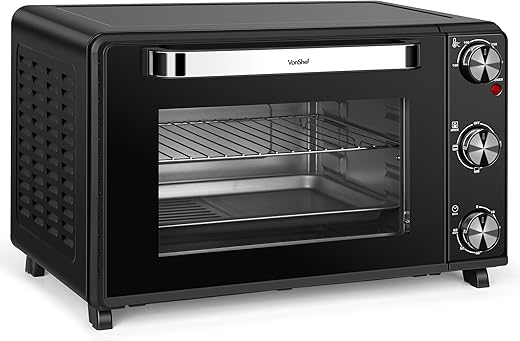
- LARGE COOKING SPACE: Need extra cooking space? This VonShef mini convection oven boasts a 30L capacity, perfect for all types of food. Despite its compact size, this space-saving portable electric cooker is big on functionality, making it an ideal fit for kitchens of all sizes.
- POWERFUL PERFORMANCE: With adjustable temperature controls ranging from 90-230°C and a robust 1600W power, this convection oven can handle anything a conventional oven can. Say goodbye to worries about overcooking with the 0-60 minute timer feature.
- MULTIPLE COOKING FUNCTIONS: Enjoy versatile cooking options with the VonHaus mini oven’s top and bottom heating elements, which can be used individually or simultaneously, making it an excellent electric cooker for grilling, baking, or roasting – all in one compact appliance.
- SAFETY FIRST: Your safety is paramount. The portable oven comes with a cool-touch housing to keep the outer surface cool, ensuring safe handling during and after cooking. The rubber anti-slip feet keep the mini oven securely in place on your kitchen counter.
- DIMENSIONS: Depth 40.0cm x Width 52cm x Height 32cm.
- OUR BRAND PROMISE: Established in 2009, VonShef is the ultimate one-stop shop for at-home chefs and budding bakers. Bring any recipe into reach with our tried-and-tested quality Mini Oven and Grill.
-

- Compact and versatile: This compact toaster oven is suitable for small kitchens, 12L volume, comfortably fitting an 8-inch pizza or four slices of bread, enhancing your cooking options without occupying too much space.
- Energy-efficient cooking: With a 750W power output and ERP certification, this mini oven efficiently roasts, bakes and grills meals, offering two rack positions and cooking modes (upper grill and lower grill) for optimal heat distribution.
- Precise temperature control: Easily adjust the temperature between 60℃ and 230℃ and set the timer up to 60 minutes for perfectly cooked meals every time using straightforward rotary controls. You can easily cook delicious meals, even as a beginner.
- Convenient cleaning: Our small oven includes a fry basket, oven rack, baking pan and crumb tray—all of which are machine washable, simplifying your post-cooking cleanup routine.
- Overall dimensions: 22.7H x 31.5W x 27.7D cm.
-

- 20L MINI OVEN – This 20L Mini Oven is extremely versatile and has 4 cooking options, grill, bake, toast and rotisserie. It is a perfect solution for those who need an oven but do not have the space to have a full one – or for those who need an extra, portable oven.
- ADJUSTABLE TEMPERATURE – With a temperature ranging from 65 degrees to 230 degrees, the mini oven includes a handy 60-minute timer with bell ringer, allowing you to set the correct time and temperature for your next meal. The oven has an internal light and two rack heights for your convenience.
- EASY TO CLEAN – The mini oven has easy clean front glass, and the included bake tray and crumb tray are both dishwasher safe. For your safety, the oven has a cool touch body, auto-power off function and non-slip feet, so it will stay secure on your kitchen counter.
- ACCESSORIES INCLUDED – The mini oven comes with 1 x bake tray (dishwasher safe), 1 x wire rack, 1 x crumb tray (dishwasher safe), 1 x tray handle and 1 x rotisserie fork. The oven dimensions are: Inside oven – 31.9 x 26.8 x 22cm. Overall oven – 45.5 x 36.2 x 28.1cm.
- QUEST APPLIANCES – Quest are the leading manufacturer of cooking appliances ideal for giving you a helping hand in the kitchen. From omelette makers & waffle makers, to teppanyaki grills & air fryers, visit the Quest store on Amazon to view the whole range.
Types of compact countertop oven
Before you choose, it helps to understand the main types you’ll see on UK sites and in stores.
Basic mini ovens and toaster ovens
These are the classic table‑top ovens many people think of:
- Usually 12–25 L capacity
- Simple dial controls
- Heating elements at the top and bottom
- Basic modes such as bake, grill, toast and sometimes a fan setting
They’re ideal if you want something cheap, compact and no‑nonsense for simple meals, student cooking or holiday homes. The trade‑off is that heat can be less even, preheating may be slower, and they often lack more advanced presets or an internal light.
Convection and air‑fryer countertop ovens
Move up a step and you’ll find compact ovens with a convection fan and sometimes a dedicated air‑fry mode:
- A fan circulates hot air for more even cooking and crisping
- Air‑fry settings pair strong fan speed with high heat for “fried” style results with little oil
- Often have more precise temperature control and timers
For many UK buyers, a small countertop convection oven or compact toaster oven with air fryer is the sweet spot – it can replace a standalone air fryer while still working as a mini oven and grill.
Multi‑function and smart compact ovens
At the top end are multi‑function compact ovens with features borrowed from built‑in ovens:
- Multiple heating elements and fan modes
- Steam assist, slow cook, dehydrate or dough proofing
- Internal temperature probes
- Wi‑Fi or app control, so you can monitor cooking from your phone
These models cost more but are ideal for keen home cooks who want maximum versatility in a small space – for example, serious bakers who can’t fit a full‑size oven in a flat.
Specialist compact pizza and high‑heat ovens
You’ll also see compact countertop ovens designed mainly for pizza or high‑heat cooking:
- Very high maximum temperatures (sometimes 400–450°C)
- Stone bases for crisp pizza bases
- Often smaller internal height and more limited general‑purpose use
They’re brilliant if you’re a pizza obsessive, but for most people, a more general‑purpose mini oven for small kitchen use will be better value.

Key factors to consider before you buy
Size, capacity and internal layout
Getting the right size is crucial – go too small and you’ll be frustrated, too big and it will dominate your worktop.
What capacity compact oven is best for 1–2 people?
As a rule of thumb:
- 1 person / student: 12–18 L mini oven can handle toast, oven chips, small pizzas and one baking tray.
- Couple or small family: 20–26 L compact electric oven with grill is more comfortable – big enough for a whole chicken or a medium roast.
- Batch cookers or enthusiastic bakers: look for 26 L+ with two rack positions so you can cook multiple trays.
Check product photos to see examples like “fits a 10″ pizza” or “4 slices of toast” – these are easier to visualise than litres alone.
Check the outside as well as the inside
Don’t just look at internal capacity. Measure:
- Your available worktop space (width, depth and height under wall units)
- Clearance for ventilation at the back and sides
- Nearby power sockets and cable length
Some compact ovens are surprisingly deep, and doors need extra clearance to open fully. If you’re in a rented flat with shallow worktops, double‑check the dimensions.
How much power should a compact countertop oven have?
Most compact ovens for UK kitchens sit between about 1,200 W and 2,000 W, which is powerful enough for fast preheating and even browning while still being safe on a 13 A socket.
Most small countertop convection ovens in the UK range from about 1,200 to 2,000 W.
- Higher wattage can mean faster preheating and better browning, but may draw more current (always check it’s suitable for a 13 A socket).
- Multiple elements (top and bottom, sometimes rear) help cook more evenly.
- Look for a temperature range from about 90–230°C as a minimum; some compact ovens reach higher for pizzas or low for slow cooking.
A slightly more powerful oven that heats up quickly can actually use less energy overall than a weak model that struggles to maintain temperature.
Cooking functions and presets
Think about what you really cook in a typical week:
- If you mainly do oven chips, frozen food and toast, basic bake, grill and toast modes are fine.
- If you cook roasts, veg trays and casseroles, a good fan (convection) mode is worth paying for.
- If you love “fried” textures with less oil, go for a compact countertop oven with air‑fry function.
Useful extra functions include:
- Stay‑on or long timer for slow cooks
- Defrost setting for frozen foods
- Keep‑warm mode
- Pizza, bagel or toast shade presets if you’re picky about browning
Be wary of long lists of fancy icons; one or two well‑designed modes you’ll use every week are better than ten gimmicks you’ll try once.
Energy efficiency and running costs
There’s no standard UK energy label for mini ovens yet, but you can still choose wisely:
- Compare wattage and capacity – a 1,500 W oven with small cavity is usually more efficient per meal than a big 3,000 W cooker.
- Look for good insulation and door seals to keep heat in.
- A convection fan often cooks faster at slightly lower temperatures, saving energy.
If you’re replacing frequent use of a full‑size oven with a compact model for everyday meals, you can significantly reduce energy use over a year, especially in a small household.
Controls, usability and safety
You’ll be using your compact oven a lot, so ease of use matters.
- Decide whether you prefer simple dials or digital controls with a display.
- Check that icons and markings are clear, especially for low light.
- An internal light is surprisingly helpful for checking progress without opening the door.
Safety features to look for:
- Auto shut‑off when the timer ends
- Cool‑touch door or handle
- Non‑slip feet and a stable stance on the worktop
- Heat‑resistant housing and good ventilation
If you have children, pets or a very tight kitchen, prioritise good handles and solid construction so the oven feels secure when opening the door.

Build quality, cleaning and durability
A compact oven that fails after a year is no bargain. When comparing models:
- Look for enamelled or non‑stick interiors that wipe clean more easily
- Check whether crumb trays and racks are removable and dishwasher‑safe
- See if the door feels solid and well‑balanced, not flimsy
Reading a mix of expert tests and user reviews is invaluable here – they often highlight hot spots, durability issues and how easy the oven really is to clean over time.
Price, brand and warranty
Compact countertop ovens range roughly from £40 for a basic mini oven to £250+ for a smart multi‑function model.
- Budget brands can be fine for occasional use, student flats or holiday homes.
- Mid‑range established brands often offer a better balance of features, build quality and customer support.
Always check:
- The length of warranty (ideally at least 2 years)
- How easy it is to get spare trays or racks
- UK‑based support or service centres
If you’ll use the oven daily, paying a bit more for reliability and a good warranty often works out cheaper in the long run.
Matching a compact countertop oven to your lifestyle
The “best” oven depends heavily on how you live and cook. Here’s how to match the appliance to real‑world scenarios.
Solo living, students and renters
If you’re in a small flat, house share or uni accommodation:
- Prioritise a mini oven for small kitchen use – compact footprint, simple controls and fast heat‑up.
- A 16–20 L, 1,300–1,600 W oven with grill and fan is usually ideal.
- Models with built‑in hob plates on top can be handy if you don’t have a full cooker.
Renters often can’t change built‑in appliances, so a good countertop oven gives you more control over how you cook without touching the landlord’s kitchen.
Busy families needing extra oven space
If you already have a built‑in oven but it’s always full:
- Think of a compact countertop oven as your second cavity.
- Use it for side dishes, roast veg, garlic bread or desserts while the main oven handles the roast.
- Look for 25 L+ capacity, strong convection and decent depth so you can fit family‑sized trays.
In this case, it’s worth investing in something a little more robust, as it will see heavy use on weekends and holidays.
Small businesses, holiday lets and home bakers
For holiday cottages, B&Bs, garden offices or side‑hustle bakers:
- You may need reliable, repeatable results for baked goods or breakfasts.
- Prioritise consistent temperature control, even heat and build quality over extra gimmicks.
- Check the manufacturer’s guidance on intensive or commercial‑style use – most mini ovens are designed for domestic kitchens only.
Holiday lets and Airbnbs benefit from compact ovens that are simple for guests to use, with clear icons and minimal risk of misuse.
Compact countertop oven vs toaster, microwave and air fryer
What each appliance does best
If you already own other small appliances, you might wonder whether a compact oven is worth it.

- Countertop oven / mini oven – best as a “mini cooker”: roasting, baking, grilling and crisp reheating. Great all‑rounder for small portions.
- Toaster oven – similar footprint but sometimes weaker at sustained high heat; best for toast, cheese on toast and light baking.
- Microwave – unbeatable for speed and energy efficiency when reheating or cooking certain foods, but doesn’t brown or crisp.
- Basket‑style air fryer – efficient for chips and small frozen items, but limited capacity and shape for baking or roasting large pieces.
A good compact countertop oven with air‑fry function can combine the strengths of several devices: you get crispy results, proper baking and roasting, and a reasonable capacity for trays and dishes.
Can a compact oven replace your main oven?
For some households, yes – particularly if:
- You live alone or as a couple
- You rarely cook very large joints or multiple trays at once
- You’re mainly roasting veg, baking small loaves or cooking oven meals
However, a built‑in oven still wins if you:
- Regularly cook for large families or dinner parties
- Need to bake multiple trays of biscuits or pastries at once
- Value a perfectly even, full‑width baking environment
For many UK kitchens, the ideal setup is a compact countertop oven as the everyday workhorse, with a full‑size oven used less often.
Practical buying checklist for UK shoppers
Must‑have features for most UK kitchens
When you’re comparing product pages, tick off these essentials:
- Capacity around 16–26 L, suited to your household size
- Power roughly 1,300–2,000 W with top and bottom elements
- A reliable convection (fan) mode
- Adjustable temperature at least 90–230°C
- 60‑minute timer (or longer) with auto shut‑off
- Clear door and ideally an internal light
- Removable crumb tray and easy‑clean interior
- UK 13 A plug and cable that reaches your socket safely
If a model misses several of these basics, think carefully before buying, no matter how tempting the price.
Nice‑to‑have extras if your budget allows
If you have a bit more to spend, consider:
- Air‑fry mode with suitable baskets or racks
- Pizza stone or dedicated pizza setting
- Digital display with precise temperature and timer
- Multiple rack positions and an included grill pan
- Child lock or safer controls if you have young kids
- Matching accessories (pans, trays) that fit perfectly inside
These extras can make day‑to‑day cooking more flexible and enjoyable, especially if your compact oven will be your primary cooker.
How to use your compact countertop oven efficiently and safely
Preheating, rack positions and avoiding hot spots
Even the best compact oven will have warmer and cooler zones. To get better results:
- Preheat fully before baking; many mini ovens reach temperature faster than full‑size ovens, so 5–10 minutes is usually enough.
- Use the middle rack for most baking and roasting.
- If your oven runs hot at the back, rotate trays halfway through cooking for more even browning.
- Avoid cramming trays right up against the sides – leave space for air to circulate.
Keep a simple oven thermometer inside for the first few weeks so you learn how accurate the built‑in thermostat is.
Cleaning and maintenance
A compact oven is much easier to clean than a full cooker – if you keep on top of it.
- Line trays with baking paper or reusable liners for messy foods.
- Wipe spills and splashes once the oven is cool but not fully cold – it’s easier when residue is still slightly soft.
- Remove and empty the crumb tray regularly to prevent smoke.
- Never spray harsh cleaners directly onto heating elements; follow the manufacturer’s cleaning guidance.
Looking after seals and hinges will help your oven hold heat properly and cook more evenly over its lifetime.
Energy‑saving tips with UK bills in mind
To keep running costs under control:
- Use your compact oven instead of the big one for small meals and single trays.
- Cook more than one dish at once where possible.
- Avoid opening the door repeatedly – you lose heat every time.
- For simple reheating, a microwave may still be more efficient; save the compact oven for dishes where crisping and browning matter.
A little planning – such as batch cooking veg or chicken for a couple of days – helps you make the most of each preheat.

Common mistakes to avoid
Choosing the wrong size or capacity
The most common regret is buying a compact oven that’s too small:
- You can’t fit your favourite baking tray or casserole dish.
- A whole chicken or larger pizza simply won’t go in.
Before you buy, grab a tape measure and check your key cookware against the internal dimensions, not just the stated litres.
On the other hand, don’t be tempted by the biggest model if you’re cooking for one and have almost no countertop space. Constantly moving a huge, heavy oven on and off the worktop gets old fast.
Poor placement and ventilation
Compact ovens still produce a lot of heat. Placing them:
- Directly under wall units without clearance
- Pressed tight against a wall at the back
- On a flimsy or heat‑sensitive surface
…can lead to scorching, overheating and even tripping thermal cut‑outs. Always follow the manufacturer’s spacing guidelines and leave room for the door to open safely.
Ignoring real‑world reviews and testing
Specs only tell part of the story. Two ovens with the same wattage and capacity can behave very differently.
Before you buy, it’s worth checking:
- Independent tests and reviews, which often rate evenness of cooking, preheat times and usability
- User reviews for recurring issues like hot spots, noisy fans or early failures
Spending 10–15 minutes on this research can save you from years of frustration.
Quick takeaways
- A compact countertop oven is ideal for small UK kitchens, households of one to three people, or anyone wanting extra oven space without a full cooker.
- Focus first on capacity, dimensions, power and core functions – don’t be distracted by fancy icons you’ll never use.
- For most people, a 20–26 L, 1,300–2,000 W convection mini oven hits the sweet spot of size, performance and running costs.
- An air‑fry mode is a genuine bonus if you love crispy textures but don’t want a separate air fryer cluttering the worktop.
- Think about where the oven will live, how it will be ventilated and whether the cable reaches your socket comfortably.
- Use your compact oven smartly – batch cooking, avoiding unnecessary preheats and choosing the right appliance for each job – to keep energy bills under control.

Conclusion: Is a compact countertop oven right for you?
If you’re short on space, cooking for a small household or simply tired of firing up a full‑size oven for a single tray of chips, a compact countertop oven is well worth serious consideration. The best models give you the core functions of a traditional cooker – baking, roasting, grilling and even air frying – in a footprint that suits a typical UK worktop and plugs into a standard socket.
By weighing up capacity, power, functions, build quality and price, you can find a mini oven that genuinely fits your lifestyle, whether that’s quick midweek meals, weekend baking or providing a second oven when family descends. Treat the spec sheet as a starting point, then think carefully about the dishes you actually cook and the space you have.
Choose wisely and you’ll end up with a compact oven that earns its keep every day – saving time, energy and precious worktop space, and making it easier to eat well in even the smallest kitchen.
FAQs about compact countertop ovens
How big should a compact countertop oven be for a family of four?
For a family of four, aim for a compact countertop oven around 24–26 L with at least two rack positions. That’s usually enough to cook a whole chicken, a tray of roasted veg or a family‑sized lasagne. If you regularly cook multiple trays at once, consider a slightly larger model or keep your full‑size oven as backup.
Do compact countertop ovens use a lot of electricity?
No, compact countertop ovens don’t usually use ‘a lot’ of electricity. Most compact ovens use less electricity per meal than a full‑size oven, especially for small portions. Typical power is 1,300–2,000 W, but because the cavity is smaller and heats faster, cooking times can be shorter. For quick reheating or steaming, a microwave will still be more efficient; for crispy baking and roasting, a compact oven is usually a good compromise between running cost and results.
Is an air‑fry function worth paying extra for?
If you love chips, roast potatoes and crispy frozen foods, then yes – a compact countertop oven with air‑fry setting is worth considering. It uses a powerful fan and high heat to mimic frying with very little oil. You get the texture you want without buying a separate air fryer, saving money and worktop space.
Can I put my compact oven in a cupboard or on a shelf?
Most manufacturers recommend open, well‑ventilated placement on a sturdy, heat‑resistant surface. Putting a compact oven in a closed cupboard or tight shelf can cause overheating and may be unsafe. If you want to store it in a cupboard when not in use, let it cool completely first and make sure there’s enough clearance when it’s in operation.
What accessories do I really need?
At minimum, look for a compact oven that includes a wire rack and a solid baking tray or grill pan. An air‑fry basket is useful if you choose a model with that function. Optional extras like pizza stones or extra trays are nice to have but not essential – just check the oven’s internal dimensions if you plan to use your own baking tins.
What size compact countertop oven is best for a single person or couple?
For one person or a couple, a compact countertop oven of around 16–20 L is usually ideal. It’s big enough for a pizza, a small roast or a tray of veg, but still fits comfortably on a typical UK worktop. Pair that with roughly 1,300–1,600 W of power and a fan mode and you’ll cover most everyday meals.
Is a compact countertop oven safe to use in a student flat or rental?
Yes, as long as you follow the manufacturer’s guidance. Place the oven on a sturdy, heat-resistant surface with good ventilation around it and plug it into a suitable 13 A socket. Don’t block the vents, don’t run it in a closed cupboard and never leave it unattended on high heat. If you’re in a rental, it’s also worth checking any rules in your tenancy agreement.
Can you bake bread and cakes properly in a mini oven?
A good compact countertop oven with a fan function and a temperature range up to around 220–230 °C can bake bread and cakes very well. The smaller cavity can even help loaves rise nicely if you preheat fully. Use the middle rack, avoid crowding the oven, and rotate tins halfway through if you notice one side browning faster than the other.
How much should I budget for a good compact countertop oven?
As a rough guide, expect to pay around £40–£80 for a basic mini oven with simple dials, £80–£150 for a fan-assisted or air-fry model from a known brand, and £150–£250+ for larger, multi-function compact ovens. If you’ll use it most days, it usually pays to spend a bit more for better build quality, consistent temperature and a decent warranty.
What’s the difference between a mini oven and a toaster oven?
In practice the terms often overlap, but there are some differences. A mini oven is usually designed as a small version of a conventional oven, with enough height and depth for roasting tins and bakes. A toaster oven tends to be shallower and more focused on toast, cheese on toast and snacks. For most UK buyers, a mini oven or compact countertop oven is the better choice if you want a genuine all-round cooker.
Informative video
Enjoyed this guide? We’d love your feedback
If this guide helped you understand what to look for in a compact countertop oven, let us know. Did you end up choosing a particular model – and how is it performing in your kitchen?
Leave a comment with your experience, share this article with a friend who’s short on kitchen space, or post it in your favourite home or student group. Your real‑world tips and questions help other UK shoppers make better choices too.


