


Table of Contents
- 1 Top recommended power blenders in 2026
- 1.1 Tefal Blendforce II Blender, 2L Plastic Jug, 1.25L Effective Capacity, 600W, 4 Removable Stainless Steel Blades, Smoothie, Ice Crush, 2 Speeds + Pulse, Kitchen Shakes Maker, Black, BL420840
- 1.2 Philips Blender 3000 Series, ProBlend System, 1.9L Maximum Capacity, 1L Effective Capacity, 450W, 1 Speed Setting + Pulse, Plastic Jar, Black, (HR2041/01)
- 1.3 Philips 5000 Series Blender – 1200W ProBlend Plus Motor, Smooth Frozen-Fruit Blending, 2L Ribbed Glass Jar, Tamper Tool, Easy Clean, Dishwasher-Safe, Black (HR3030/00)
- 1.4 Tefal Black Collection Blender, 2L Jug, 2 Speeds, Pulse Mode, Kitchen Blender, 6 Stainless Steel Removable Blades, Smoothies, Milkshakes, protein Shakes, Cocktails, Ice Crush, Soups, 500W BL3558G0
- 1.5 Tefal Blendforce II Blender, 2L Plastic Jug, 1.25L Effective Capacity, 600W, 4 Removable Stainless Steel Blades, Smoothie, Ice Crush, 2 Speeds + Pulse, Kitchen Shakes Maker, White, BL420140
- 2 Blender Power and Wattage: What Do the Numbers Mean?
- 3 High-Wattage vs. Low-Wattage Blenders: Which Is Right for You?
- 4 Key Factors That Influence Blender Performance
- 5 Choosing the Right Blender for Your Needs
- 6 Frequently Asked Questions
- 6.1 What are the benefits of using a high-wattage blender?
- 6.2 How does motor power affect the performance of a blender?
- 6.3 Is there a significant difference between 1000W and 1500W blenders?
- 6.4 Can a lower wattage blender effectively handle tough ingredients?
- 6.5 What should I consider when choosing the speed settings on a blender?
- 6.6 Does higher power consumption necessarily mean better blending results?
- 7 Informative video
When you shop for a blender, the wattage number often stands out. It seems simple – more watts mean more blender power – but that’s not the whole story.
A 1500W blender gives you strong, consistent performance for tough jobs like crushing ice or blending nuts, but it may be more than you need for everyday smoothies or soups. Understanding how wattage relates to speed and performance helps you choose the right model for your kitchen.
You’ll notice that blenders range from around 300W to 1500W or more. The difference affects how easily they handle ingredients, how smooth your blends turn out, and even how long the motor lasts. A higher wattage can save time and deliver finer textures, but it can also mean more noise, higher cost, and unnecessary power for lighter tasks.
Choosing the right balance of power, design, and speed settings makes all the difference. Once you understand what wattage really means, you can match your blender to your cooking style instead of paying for features you won’t use.
Key Takeaways
- Wattage affects how well a blender handles tough ingredients.
- More power isn’t always better for everyday blending.
- The best blender matches your needs, not just the highest wattage.
Top recommended power blenders in 2026
-


- Optimum blending: a 600W motor, four robust stainless-steel blades and a tapered jug shape combine for efficient blending without chunks, every time. It even crushes ice with ease.
- Cool running: the built-in air cooling system optimizes airflow through the motor to keep things cool, prevent overheating and extend the life of your blender.
- Solid performance: Four suction feet keep Blendforce II stable on your worktop, no matter how tough the ingredients.
- Easy to use: with a two-speed (plus pulse) rotary dial for custom blending, 1.25L capacity for big batches, ergonomic handle for comfort, and dishwasher-safe, removable parts for easy cleaning.
- Safe: the secure lock system shows you when the jug is locked securely onto the base, while the smart lid with filling hole lets you add ingredients safely and easily when the blender is in use.
-
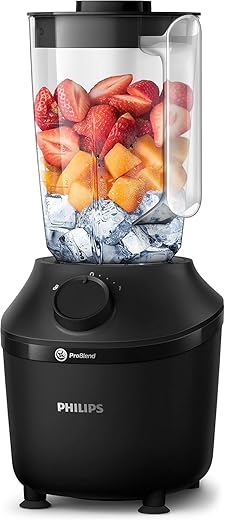
- Smooth blends, no lumps: Powerful 450 W motor for smooth results in just 45 seconds* – With 1 speed, Pulse function and up to 19000 rotations per minute for fast, consistent blends
- Family sized: Blender smoothie maker for the whole family – Large 1.9-litre jug prepares up to 5 servings at a time (based on 200 ml glass size)
- Unique technology: Our ProBlend system combines motor, blade shape and jug design for optimal blending flow and cutting power to take on all ingredients and even crush ice
- Personalised recipes: Make healthy homemade smoothies, soups and more with our HomeID App – Find inspiring recipes personalised to your preferences and follow them easily step-by-step
- What’s in the box: Food Blender, dishwasher-safe plastic jug
-

- Effortless Smoothies: Enjoy velvety and thick-frozen smoothies effortlessly without adding water with the Philips 5000 Series Blender, featuring ProBlend Plus technology for 50% more power (1)
- ProBlend Plus Technology: The 1200W ProBlend Plus motor effortlessly turns tough ingredients into silky-smooth textures, aided by ProBlend Plus blades and ribbed jars for optimal circulation
- Large Family Capacity: With a 2-liter capacity, including a 1.5-liter working capacity, this blender is perfect for creating healthy, delicious smoothies for the whole family in one batch
- Convenient and Easy to Clean: Experience convenient use and easy cleaning with features such as 3 speeds plus pulse, detachable blades for effortless cleanup, and dishwasher-safe parts
- 3 Speeds plus Pulse: Take control with 3 speeds plus Pulse settings, allowing you to choose the perfect blending speed for both hard and soft ingredients
- Easy Cleaning Without Scrubbing: Enjoy easy cleanup with the manual clean setting and dishwasher-safe detachable parts, making scrubbing a thing of the past
-

- VERSATILE: Blender with 2 speeds plus Pulse mode, all via ergonomic rotary button
- SMART LOCK: Removable stainless steel blades with 3-point system, for safe and easy locking and cleaning
- POWERFUL: Kitchen blender with 500 W blender for fast, perfect results without any chunks
- LARGE CAPACITY: 2 L plastic jar with a blending capacity of 1.25 L—perfect for the whole family
- 15-YEAR REPAIRABILITY AT A FAIR PRICE: We recommend repairing your product at our network of 6,200 repair centers worldwide so it can last longer
-

- Optimum blending: a 600W motor, four robust stainless-steel blades and a tapered jug shape combine for efficient blending without chunks, every time. It even crushes ice with ease
- Cool running: the built-in air cooling system optimizes airflow through the motor to keep things cool, prevent overheating and extend the life of your blender
- Solid performance: Four suction feet keep Blendforce II stable on your worktop, no matter how tough the ingredients
- Easy to use: with a two-speed (plus pulse) rotary dial for custom blending, 1.25L capacity for big batches, ergonomic handle for comfort, and dishwasher-safe, removable parts for easy cleaning
- Safe: the secure lock system shows you when the jug is locked securely onto the base, while the smart lid with filling hole lets you add ingredients safely and easily when the blender is in use
Blender Power and Wattage: What Do the Numbers Mean?
Blender power ratings tell you how much energy the motor can use and how efficiently it turns that energy into movement. Understanding these numbers helps you choose a blender that can handle your typical ingredients without wasting power or overheating.
How Wattage Relates to Blender Performance
Wattage measures how much electrical power the blender motor draws. Most household blenders range from 300W to 1500W, depending on their design and purpose.
Higher wattage usually means more blender power, allowing the blades to maintain speed when blending thick or hard ingredients like ice, nuts, or frozen fruit. A 1000W or greater motor can handle tougher tasks, while 300–700W models work well for lighter jobs like smoothies or soups.

However, wattage alone doesn’t guarantee better results. Blade design, container shape, and motor efficiency all affect how well the blender converts electrical power into blending force. Two blenders with the same wattage can perform differently if one has a better motor design or sharper blades.
| Task Type | Recommended Wattage | Example Use |
|---|---|---|
| Light blending | 300–600W | Soft fruits, sauces |
| Medium blending | 700–1000W | Smoothies, soups |
| Heavy blending | 1200–1500W+ | Ice crushing, nut butter |
Blender Motor Design and Torque
The blender motor converts electricity into rotational motion that spins the blades. Its design determines how efficiently it transfers energy and how much torque—rotational force—it can generate.
Torque is what allows the blades to keep spinning under load. A motor with higher torque can maintain consistent speed even when blending dense ingredients. This prevents stalling and ensures smoother textures.
Good motor design balances torque, speed, and cooling. High-speed motors may reach over 20,000 RPM, but without proper ventilation or bearings, they can overheat or wear quickly. You get better performance and durability when the motor design supports steady torque output across different speeds.
Continuous vs. Peak Power Ratings
Manufacturers often list both continuous and peak power ratings. Continuous power shows the wattage the motor can sustain safely during normal use. Peak power represents the brief surge available at startup when the motor first spins the blades.
For example, a blender labelled 1500W peak might only run at 1000W continuous. The peak value helps start tough ingredients but cannot be maintained for long without overheating.
When comparing models, focus on continuous wattage and rated horsepower, as these reflect real-world performance. Peak numbers can be misleading if used alone. Checking both ratings helps you understand how much power your blender can deliver consistently without straining the motor or reducing its lifespan.
High-Wattage vs. Low-Wattage Blenders: Which Is Right for You?
The power rating of a blender affects how well it handles different ingredients, how long it lasts under heavy use, and how much energy it consumes. The right wattage depends on what you blend most often and how much performance you expect from your appliance.
What Can a 1500W Blender Do?
A 1500W blender delivers enough power to crush ice, grind nuts, and blend dense ingredients into smooth mixtures. You can use it for nut butters, frozen fruit smoothies, or hot soups without worrying about motor strain. The blades spin fast enough to create a fine texture with minimal chunks.

High-wattage blenders usually include strong motors and durable blades designed for frequent, heavy use. They maintain consistent speed even when blending thick mixtures. This makes them suitable for people who prepare large batches or use their blender daily.
However, more power also means higher energy consumption. While blending time is shorter, the motor draws more electricity during operation. For demanding blending tasks, though, the performance gain often outweighs the extra power use.
Low-Wattage Blenders: Strengths and Limitations
A low-wattage blender (under 700W) works well for lighter tasks like smoothies, sauces, or soups. It’s often smaller, quieter, and more affordable. If you blend soft fruits or liquids, you’ll get good results without needing a powerful motor.
These models may struggle with tough ingredients such as ice, frozen fruit, or nuts. The blades can slow down or leave uneven textures. Extended use on hard ingredients may cause the motor to overheat or wear out faster.
Low-wattage blenders are best for occasional use or smaller portions. They consume less electricity, making them more efficient for basic blending. Still, they’re not ideal if you need consistent results with thick or fibrous foods.
Energy Usage and Noise Level Considerations
A blender’s energy usage depends on both wattage and blending time. High-wattage models draw more power but complete tasks faster. Low-wattage units use less power per minute but may run longer to achieve similar results.
Noise level also varies with motor strength. High-power motors generate more sound, especially when crushing ice or frozen ingredients. Low-wattage blenders tend to be quieter but can still vibrate noticeably on hard surfaces.
If you blend early in the morning or in shared spaces, noise may influence your choice. For the best balance, look for models with sound-dampening design or rubber bases that reduce vibration and noise during operation.
Key Factors That Influence Blender Performance
A blender’s effectiveness depends on more than just motor wattage. The design of the blades, the quality of the jar, and the control of speed settings all determine how well ingredients are processed and how long the appliance lasts.
Blade Design and Material
The blade design directly affects how efficiently ingredients move through the jar. Blades positioned at different angles create a vortex that pulls food toward the centre for even blending. Poorly designed blades can leave chunks or cause uneven textures.
Stainless steel blades are the most durable and corrosion-resistant option. They stay sharp longer and handle tough ingredients like ice, nuts, and fibrous vegetables without bending. Some blenders use multiple blade layers to improve circulation and reduce blending time.
A wider blade base can improve contact with ingredients, while sharper edges help cut through dense foods. Look for blades that lock securely to prevent leaks or wear. Regular cleaning and drying help maintain blade performance and prevent dulling over time.
Jar Material and Build Quality
The jar material affects both performance and durability. Common options include glass, plastic, and Tritan. Glass jars resist staining and odour absorption but can be heavy and fragile. Plastic jars are lightweight and shatter-resistant but may scratch or cloud with use. Tritan offers a balance of clarity, strength, and safety, being BPA-free and durable.
The build quality of the jar and base connection is also important. A solid seal between the jar and motor base prevents movement and leakage during operation. Thick walls and a sturdy handle make it easier to pour and clean.
Jar shape influences blending efficiency. A tapered or curved design helps ingredients circulate smoothly toward the blades, reducing the need to stop and stir.
Speed Settings and Controls
Speed settings give you control over texture and consistency. A single-speed blender limits flexibility, while models with variable speeds let you adjust power for different tasks.

Low speeds are ideal for mixing soft ingredients or sauces. Medium speeds handle smoothies and soups. High speeds are best for crushing ice or grinding nuts.
Some blenders include pre-programmed settings for common uses like smoothies or ice crushing. These automate speed changes for consistent results.
Look for intuitive controls such as dials, buttons, or touch panels that are easy to adjust mid-blend. A pulse function adds short bursts of power, giving you better control over chunkier mixtures or delicate ingredients.
Choosing the Right Blender for Your Needs
Selecting the right blender depends on how you plan to use it, the ingredients you often prepare, and the level of power you need. Understanding the main types of blenders and their wattage ranges helps you decide which model fits your kitchen tasks best.
Blender Types: Personal, Home, and High-Performance
Blenders come in three main categories: personal, home, and high-performance. Each suits different needs and power levels.
Personal blenders are compact and usually range from 200–600 watts. They work well for single servings like smoothies or protein shakes. Their small size makes them easy to clean and store, ideal for quick daily use.
Home blenders typically range between 500–900 watts. They handle most household tasks such as blending soups, sauces, and frozen fruit. These models balance power, capacity, and cost, making them a practical choice for everyday cooking.

High-performance blenders exceed 1000 watts and are designed for tougher jobs. They can crush ice, grind nuts, or make thick nut butters with ease. These blenders often feature stronger motors, better cooling systems, and durable blades suited for frequent, heavy use.
Matching Blender Power to Ingredients and Recipes
The power you need depends on what you blend most often. Low-wattage blenders handle soft foods like bananas or cooked vegetables. For thicker or frozen ingredients, higher wattage ensures smoother, faster results.
| Task | Recommended Power | Example Ingredients |
|---|---|---|
| Light blending | 300–600W | Soft fruits, shakes |
| Medium blending | 700–900W | Soups, sauces |
| Heavy blending | 1000–1500W | Ice, nuts, frozen fruit |
If you blend frozen fruits or crush ice regularly, choose a motor with at least 1000 watts. For occasional use or lighter recipes, a mid-range home blender is usually sufficient. Power also affects consistency—higher wattage creates smoother textures with less effort.
Blender Applications: Smoothies, Soups, Nut Butters, and More
Different recipes place different demands on your blender. For smoothies and protein shakes, a personal blender offers convenience and portion control. It’s perfect for quick mixing and easy cleaning.
When making soups, a home blender works well for blending hot or cooked ingredients into a smooth texture. Choose a model with a heat-resistant jug if you blend directly from the pot.
For nut butters or recipes that involve crushing ice, a high-performance blender is best. Its strong motor and durable blades can handle dense, dry, or frozen ingredients without strain. This makes it a reliable kitchen appliance for varied and frequent use.
Frequently Asked Questions
Understanding blender wattage and speed helps you choose a machine that matches your blending habits. Power affects how smoothly a blender handles dense ingredients, while speed settings determine control and texture.
What are the benefits of using a high-wattage blender?
A high-wattage blender, usually 1000 watts or more, provides stronger torque and faster blade rotation. This allows you to blend thick mixtures like nut butter or frozen fruit with less effort. You also get smoother textures and shorter blending times.
How does motor power affect the performance of a blender?
Motor power determines how well the blades maintain speed under load. A stronger motor keeps consistent performance when blending dense or fibrous foods. This reduces strain on the motor and helps extend the appliance’s lifespan.
Is there a significant difference between 1000W and 1500W blenders?
The difference mainly appears in speed, efficiency, and durability. A 1500W blender can handle heavy-duty tasks more easily and sustain longer blending cycles without overheating. However, for everyday use like smoothies or soups, a 1000W model is often sufficient.
Can a lower wattage blender effectively handle tough ingredients?
A lower wattage blender, around 500–700 watts, can manage tough ingredients if you use smaller batches and add enough liquid. You may need longer blending times or to pause and stir. It works best for soft fruits and light mixtures rather than ice or nuts.
What should I consider when choosing the speed settings on a blender?
Choose a blender with multiple speed options to give you better control. Lower speeds help when mixing or chopping, while higher speeds create smooth purees. Pulse settings are useful for short bursts of power that prevent over-blending.
Does higher power consumption necessarily mean better blending results?
Not always. Higher wattage increases potential power, but design factors like blade shape and jar size also affect performance. A well-designed 800W blender can outperform a poorly built 1200W model if it uses energy more efficiently and directs ingredients effectively.
Informative video
To help you understand blender power, speed settings and real-world performance even more clearly, here’s a short video that explains the key concepts in a simple, visual way. It’s a quick and practical overview that complements the details from this guide.


