


Table of Contents
- 1 Recommended Portable Induction Hobs 2026
- 1.1 Daewoo 2200W Portable Single Induction Hob – Convenient Electric Cooktop for Use With Induction-Suitable Pans, 6 Presets, LED Controls & Timer
- 1.2 Abode Double Induction Hob Portable Digital Touch Control 2800W Double Electric Hob with 2 Cooking Zones, Plug In & Go, 10 Heat Settings 3 Hour Timer Black, Child Safety Lock AINDH2003
- 1.3 Tefal Everyday Portable Electric Induction Hob, 2 hours timer, 6 functions, 9 power level, 2100W, Kitchen, Student, Cooking, Caravan, Party, Black, IH201840
- 1.4 VonShef Double Induction Hob – 2800W Portable Dual, Twin Plate Electric Table Top with LED Display, Built-In Timer, 10 Heat Settings 60-240°C – Black
- 1.5 CIARRA Portable Induction Hob 2800W Double Cooking Zones with Touch Control Ceramic Glass Panel 9 Power Levels Timer Child and Safety CUTIH2
- 2 What Are Single and Double Zone Portable Induction Hobs?
- 3 How Induction Cooking Works
- 4 Core Advantages of Single Zone Portable Induction Hobs
- 5 Core Advantages of Double Zone Portable Induction Hobs
- 6 Common Drawbacks of Single and Double Zone Models
- 7 Comparison Table: Single vs Double Zone Induction Hobs
- 8 Key Features to Consider When Choosing
- 9 Best Practices for Efficient Induction Cooking
- 10 Target Users and Ideal Applications
- 11 Frequently Asked Questions
- 11.1 What are the main differences between single and double zone portable induction hobs?
- 11.2 Can you highlight the advantages of using a single zone induction hob over a double zone hob?
- 11.3 What are the disadvantages of double zone portable induction hobs compared to single zone hobs?
- 11.4 How does the cooking flexibility offered by double zone hobs compare to single zone models?
- 11.5 Could you detail the energy efficiency of single vs double zone induction hobs?
- 11.6 What should be considered when deciding between a single and a double zone portable induction hob for a small kitchen space?
Choosing between single and double zone portable induction hobs can really change up how you cook, especially if you’re short on kitchen space or just want a bit of extra firepower. Portable induction hobs are all about flexibility – you just need mains power and you’re good to go, whether that’s a tiny flat, a caravan, or even the garden shed. Plus, they heat up faster and use less energy than old-school gas or electric cookers, which is a nice bonus.
Single zone models shine in tight spaces and for basic cooking, while double zone hobs let you juggle multiple dishes at once—but yeah, they’ll hog more power and counter space. Knowing the main differences between these two can help you pick the right one for your kitchen habits and setup.
Both types deliver the usual perks of induction cooking: fast heating, spot-on temperature control, and easy cleanup. But which one fits your life comes down to your cooking style, space, and what kind of power you’ve got available.
Key Takeaways
- Single zone hobs are better for small places and simple meals; double zones are great for bigger feasts and cooking more than one thing at once
- Induction tech heats up to 40% faster than gas or electric, uses less energy, and is safer overall
- Think about your power supply, counter space, and what you usually cook before choosing a single or double zone model
Recommended Portable Induction Hobs 2026
-
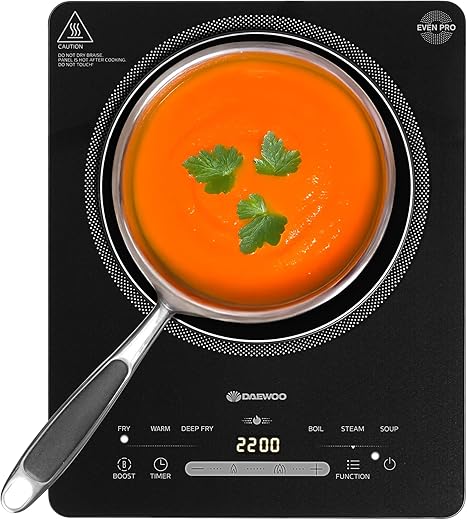

- Fast & Efficient Heating – Induction technology heats your pans directly for rapid, energy-saving cooking. Works only with induction-suitable cookware such as steel or cast iron pans (Check With Bakeware Manufacturer For Compatibility)
- Fast, Precise Cooking for Any Kitchen – Whether you’re a student in a dorm or need extra cooking space for holiday meals, the 2200W Boost mode delivers rapid heat ideal for boiling pasta or searing meat in minutes
- 6 Smart Cooking Presets – Fry, boil, steam, and more with a tap. Each setting is fine-tuned for everyday tasks, helping busy families and solo cooks alike save time and effort
- Simple Touch Controls with LED Display – Easily set temperatures and timers with intuitive digital controls. Perfect for elderly users, beginners, or anyone who values convenience and clarity
- Reliable & Safe for Everyday Use – Includes cooling fan system (inlet underneath, outlet at rear) and auto shut-off. A 3-hour timer adjustable in 1 or 10-minute steps, ideal for stews, soups, and sauces
-

- COMPACT & POWERFUL – This stylish portable induction hob fits neatly on the counter. Ideal when you’re short on space or need extra cooking room for entertaining guests.
- EASY TO USE – Quickly alternate between the 10 power settings using the touch controls and digital LED display. The safety child-lock feature avoids accidental use or settings change, whilst the 180-minute shutoff offers added peace of mind.
- LARGE COOKING SURFACE – A 20cm hob ring accommodates larger pans sizes and works with any pan suitable for induction cooking.
- INDUCTION TECHNOLOGY – Clever induction technology means quick heat-up and cool-down times. While the pan bases heat up, the hob surface stays cool. Quickly clean any spills and soon after pop it back in the cupboard for next time.
- MULTIPLE USES – Great for when you need extra cooking space for those big family gatherings, or to cook side dishes for your BBQ outside. Ideal for camping, holiday lets, or as a quick temporary fix when you find yourself without a hob.
- 1 YEAR GUARANTEE – This product comes with a free one year manufacturer guarantee.
-

- Durable Black Ceramic Plate: Scratch-proof, heat-proof, and easy to clean. Suitable for pots and pans with a base size of 12cm-25cm, made of iron (cast iron, stainless steel, or enamel) with a double bottom or magnetic induction materials with a flat bottom diameter.
- Integrated Timer and LED Display: 2-hour timer with an easy-to-use LED display control panel. The ceramic plate can be cleaned effortlessly with a damp soft cloth.
- Multiple Cooking Functions: 6 pre-set cooking modes (Manual, Heat Milk, Stew, Stir Fry, Deep Fry, Boil Water) and 9 adjustable power levels ranging from 450W to 2100W.
- Energy Efficient: Direct heat transfer ensures faster heating, precise temperature control, and an automatic shut-off feature, reducing overall energy consumption.
- Compact and Portable Design: Ideal for those living alone, in small homes, students, or for extra hob space. Perfect for taking along to the caravan.
- Enhanced Safety Features: No open flames reduce the risk of burns and fires. The hob surface remains relatively cool, and it automatically shuts off when no pan is detected.
- Versatility in Cooking: Perfect for a variety of cooking needs – boiling water, simmering sauces, searing meat, or stir-frying vegetables. Precise temperature and cooking time settings allow for experimenting with new recipes.
-

- FEED FAMILY & FRIENDS: Take the stress out of hosting large dinner parties with your VonShef dual induction hob. With 2 separate heating zones, choose whether to set each one independently or use together.
- POWERFUL & PORTABLE: Don’t be deceived by the slimline portable design – the plates combined feature a hefty max output of 2800W! Suitable for induction pans only, your durable 2 ring induction cooker packs a punch.
- TAKE CONTROL OF YOUR COOKING: Featuring a generous 10 heat settings from 60-240 degrees, a handy built-in timer and LED display, get into true head chef mode with your black double electric hob.
- FAST & FUSS-FREE FEASTING: A great alternative to gas hobs, your induction hob heats the whole pan rather than the surface for effective results. Easily adjust with the user-friendly touch controls.
- OUR BRAND PROMISE: Established in 2009, VonShef is the ultimate one-stop shop for at-home chefs and budding bakers. Bring any recipe into reach with our tried-and-tested quality our Double Induction Hob.
-

- CONVENIENT PORTABLE DESIGN: Ultra thin with 45mm thickness, the hotplate can save much storing space.
- POWER AND TEMPERATURE SETTINGS: The induction hotplate can be set at 10 temperature levels 60℃ to 240℃, or 9 different power levels(200W-2000W), which are enough to prepare various dishes.
- ENERGY-EFFICIENCY: Two cooking zones can be operated separately with the highest total power of 2800W.
- HIGH SECURITY: With the child safety lock, automatic pot recognition, automatic switch-off, and residual heat indicator. With these functions we can ensure a safer using experience.
- COMPATIBLE COOKWARE: Suitable for induction-compatible cookware with a magnetic base (12 to 28 cm in diameter).
What Are Single and Double Zone Portable Induction Hobs?
Single zone portable induction hobs have one cooking surface. Double zone models give you two separate cooking areas, each with its own controls. Both types plug into a regular 13A socket and use electromagnetic tech to heat pots and pans directly.
Defining Single Zone Portable Induction Hobs
Single zone hobs come with one circular cooking area. You can only use one pan at a time—makes sense, right?
They’re usually between 280-350mm wide, and most weigh in at 2-4kg. Super easy to move around or stash away.
Power output is generally 1,400W to 2,100W, with 8-10 power levels and temps up to 240°C.
The zone fits pans with bases between 12-25cm, so most standard saucepans and frying pans fit just fine.
These are perfect for small kitchens, caravans, or student digs. Handy as a backup too if your main hob decides to quit.
Defining Double Zone Portable Induction Hobs
Double zone hobs have two cooking surfaces sitting side by side. Each one has its own controls and power settings, so you can run them separately.
They’re bigger—about 580-650mm wide and 360-400mm deep. Weight? Usually 5-8kg, since you’ve got two heating elements in there.
Total power consumption is 2,800W to 3,500W for both zones together. Each side typically gives you 1,400W to 2,000W.
You can set each area to a different temperature or power. Boil pasta on one, simmer soup on the other—easy.
Double zone hobs are a good fit for bigger households or anyone who likes to cook a lot at once. They’re a lifesaver for dinner parties or batch cooking.
Key Differences in Design and Functionality
The big difference? Cooking capacity. Singles handle one pan, doubles let you use two at the same time.
Size and portability are pretty different too:
| Feature | Single Zone | Double Zone |
|---|---|---|
| Width | 280-350mm | 580-650mm |
| Weight | 2-4kg | 5-8kg |
| Storage | Compact | Requires more space |
Power management is a bit different. Singles put all the power into one zone. Doubles split the power if you’re using both at once.
Control systems—single zone hobs have one set of buttons or touch controls. Double zones have separate controls for each side, so you can tweak them independently.
Price points follow the complexity. Singles run about £30-80, doubles are usually £60-150.
How Induction Cooking Works
Induction tech uses electromagnetic fields to heat your pans directly. It’s faster and more energy-efficient than regular electric or gas hobs. The surface itself stays cool, but you get super precise heat control.
The Science Behind Induction Technology
There’s a magnetic field created between the hob and your pan. Pop a compatible pan on the surface, and the field heats the pan up from the inside.
Under the glass, there are copper coils. Electricity runs through them, creating electromagnetic energy. Your pan acts like a conductor and turns that into heat—pretty clever, honestly.
Only the pan gets hot, not the hob surface. That’s why induction is safer than electric hobs. The glass doesn’t really heat up.
You’ll need magnetic cookware for this to work. Cast iron, carbon steel, and some stainless steel pans are good. Aluminium and copper won’t work unless they’ve got a magnetic base stuck on.
Take the pan off and the hob shuts off instantly. No pan, no heat—simple as that.
Benefits Over Electric and Gas Hobs
Speed is a game-changer. Induction hobs boil water twice as fast as gas. That’s a real time-saver when you’re in a rush.
Energy efficiency is another plus. About 85-90% of the energy goes straight into your food. Electric hobs only manage 40-55%, and gas is even lower.
Precise temperature control means you can tweak the heat instantly, kind of like gas cooking. No waiting around for things to heat up or cool down.
Safety features are built in. The surface stays cool, so burns are less likely. Most models have child locks and automatic shut-off timers as well.
Easy cleaning is a big win. Food doesn’t burn onto the surface, so a quick wipe is usually all you need.
Core Advantages of Single Zone Portable Induction Hobs
Single zone induction hobs really hit the mark in a few areas. They’re space-savers, energy-efficient, and super simple to use—great for certain cooking setups.

Space-Saving and Portability
These hobs are seriously compact. Usually about 30cm x 35cm, which is perfect for tiny kitchens, student flats, or caravans.
Weight is another perk—just 2-4kg for most models. You can move them around or stash them away with hardly any effort.
Storage is flexible. You can:
- Slip them into slim kitchen drawers
- Stand them upright in a cupboard
- Take them camping
- Move them from one room to another without breaking a sweat
The small footprint means you don’t lose precious worktop space. That’s always a plus in a cramped kitchen.
Portability makes them handy outside the main kitchen too. Use them on the dining table, outside, or anywhere you’ve got a 13A socket. Why not?
Energy Efficiency
Single zone hobs tend to use power more efficiently than double zone ones. All the juice goes to one zone, not split between two.
Power consumption is lower overall—usually 1400-2000 watts max. That can mean smaller electricity bills for your day-to-day cooking.
The magnetic field heats your pan directly, so you’re not wasting energy like you do with gas or old electric hobs.
Cooking is faster. Boiling water takes half the time compared to gas. That’s less time waiting and less energy burned.
Temperature control is more precise. You can nudge the heat up or down instantly, which helps avoid overcooking and saves energy.
Most models have automatic switch-off. If you forget to turn it off, it’ll handle that for you—nice little safety net.
Simplicity of Operation
Single zone hobs are dead simple to use. Usually, it’s just a few touch controls and a clear display for power or temperature.
The learning curve is pretty much zero. One zone, one set of controls—no confusion.
Cleanup is a breeze. The glass surface wipes down quickly. No fiddly bits or multiple zones to work around.
Setup couldn’t be easier. Plug it in and you’re ready to cook. No need for an electrician or special wiring.
Settings are usually numbered 1-10 or shown in watts. That makes it easy to repeat recipes without guessing.
Touch controls react straight away. You can tweak the heat up or down instantly, so you’re always in control of your cooking.
Core Advantages of Double Zone Portable Induction Hobs
Double zone induction hobs let you cook on two zones at once, each with its own temperature and power settings. They’re all about making your kitchen more efficient and letting you multitask.
Increased Cooking Flexibility
You get two separate cooking areas, each working independently. Each zone has its own controls for temperature and power—no need to compromise.

Cook totally different dishes at the same time. Simmer a sauce on one side, sear meat on the other—no problem.
Key flexibility benefits:
- Independent temperature control for each zone
- Use different sized pans at once
- Try out different cooking methods simultaneously
- Switch between zones without messing up the other
This setup makes it easier to handle more complicated recipes. No need to stick to foods that all need the same heat.
Being able to adjust one zone without touching the other helps avoid mistakes, especially when you’re juggling a few things at once.
Ideal for Larger Meals
Double zone hobs are perfect when you’re cooking for a crowd. You can make mains and sides together, instead of in batches.
Family dinners get a lot less stressful. One zone for protein, the other for veggies or starches—done.
Meal prep advantages:
- Cook multiple courses at once
- Get bigger batches done faster
- Keep all your dishes on schedule
- Cut down on total cooking time
Having two zones just makes entertaining easier. Prep appetisers on one, main course on the other—no more juggling pans and hoping everything’s hot at the same time.
It’s also a big help for meal prep days. Cook a bunch of different things at once and you’re set for the week.
Power Distribution and Multi-Tasking
Most double zone portable induction hobs use power management systems. When you turn on both zones, the total power gets split between them.
Typically, you’ll see units with 2800W total, shared out between both sides. Sometimes, one zone might get 2000W while the other tops out at 1500W.
Power management features:
- Automatic power distribution
- Individual zone power limits
- Boost functions for quick heating
- Energy-efficient operation overall
Even with power sharing, induction hobs still heat up way faster than old-school gas hobs. You can usually give one zone priority if you need to, like when you’re desperate to boil water in a hurry.
Many models let you boost a zone temporarily for those moments. The system keeps everything safe and within household power limits, so you don’t have to worry about tripping a breaker just to make dinner.
Common Drawbacks of Single and Double Zone Models
Both single and double zone induction hobs come with a few headaches you’ll want to know about before buying. There are strict cookware rules, a bit less power than full-sized models, and you’ll probably have to tweak your cooking techniques a bit.
Cookware Compatibility Requirements
You can only use induction-friendly cookware with these hobs. If your pots and pans aren’t magnetic, you’re out of luck.
Induction hobs need ferromagnetic materials. Cast iron, carbon steel, and most stainless steel pans are fine. Aluminium, copper, glass, or ceramic won’t work—unless they’ve got a magnetic base.
Testing is easy. Grab a magnet and stick it to the bottom of your pan. If it grabs, you’re good to go.
You might end up replacing most of your pans, which can get pricey. A starter set of induction-ready cookware will run you anywhere from £100-300, which isn’t exactly pocket change.
Iron pans are brilliant for induction. They heat evenly and react quickly. Cast iron Dutch ovens are a personal favourite for portable induction setups.
Just keep an eye on the weight limits—some portable models aren’t built to handle heavy cast iron, especially when you load them up with food.
Limitations in Power Output
Portable induction hobs just don’t have the grunt of built-in models. Most top out at 2000-2500 watts, while full-sized units can reach 3700 watts per zone.
This means things like boiling water might take a bit longer. Searing steaks or stir-frying at high heat is tougher, too.
Low-temperature cooking can be tricky on many models. Some only go down to 300 watts, not the 100 watts you’d want for a gentle simmer. That makes things like simmering or melting chocolate a pain.
Honestly, melting chocolate is hit-or-miss. The lowest setting is often still too hot, so you lose out on some cooking versatility.
Power fluctuations can be a nuisance. The cooling fans sometimes can’t keep up, so the unit cycles on and off, leaving you with uneven temps.
Potential Learning Curve
Induction cooking feels different, so you’ll need to adjust. The heat is instant, which can throw you off if you’re used to gas or electric.
Every brand seems to have its own idea of what “medium” or “high” means. You’ll probably spend a while figuring out your hob’s quirks.
Presets can be confusing or just plain wrong. Sometimes you need to use the “cake” setting just to cook rice. The labels don’t always match the real-world results.
Manual controls are usually more reliable. If you can, pick a model with simple 1-10 power levels instead of a mess of presets.
Instruction manuals? Usually not great. Expect to experiment a lot before you really get the hang of things.
Comparison Table: Single vs Double Zone Induction Hobs
Here’s a quick side-by-side to help you figure out which type of induction hob suits you best:
| Feature | Single Zone | Double Zone |
|---|---|---|
| Power Output | 2000-3500W to one zone | 2800-3600W split between zones |
| Cooking Capacity | One pan at a time | Two pans simultaneously |
| Size | Compact, 30-35cm wide | Larger, 50-60cm wide |
| Price Range | £30-£80 | £60-£150 |
| Power Setting Control | 8-20 power levels for single zone | Independent controls per zone |
| Energy Efficiency | Full power to one cooking task | Shared power management system |
| Storage | Easy to store in cupboards | Requires more storage space |
| Best For | Students, caravans, backup cooking | Families, entertaining, main cooking |
Power matters when you’re choosing. Single zones send all the juice to one pan, while double zones split it up between two cooking spots.
Space is another big factor. Single zone hobs are compact and fit just about anywhere. Double zones take up more room but let you cook more at once.
Controls differ too. Most single zones have 8-10 settings. Double zone hobs often give you independent power and temperature for each side.
Honestly, it comes down to your habits and kitchen size. Singles are great for basic meals. Doubles make sense if you’re cooking for a crowd or love multitasking.
Key Features to Consider When Choosing
When you’re picking out a portable induction hob, three things really shape your experience: power options, control systems, and safety features.
Power Settings and Temperature Adjustments
Most portable induction hobs offer somewhere between 9 and 20 power levels. The fancier models, like Aobosi, give you 20 temperature settings and 18 power levels, which is honestly more than most people need.
Single zones usually go from 1400W up to 2800W. Double zone hobs split that, and one side might have a little more oomph than the other.
Temperature ranges tend to run from 60°C up to 240°C. More levels mean you can actually melt chocolate or simmer sauces without burning them.
Look for those one-touch max/min power buttons. They’re lifesavers when you need to crank up the heat or cool things down in a flash.
Boost mode is handy for boiling water or getting a pan screaming hot. It’s worth having, even if you don’t use it every day.
Touch Controls and Advanced Safety
Most modern induction hobs use touch sensors instead of buttons. The glass is easy to wipe down, and you don’t have to worry about melted plastic or sticky knobs.
LED displays are a must—seeing your power, temperature, and timer at a glance just makes life easier.
Slider touch controls are nice for quick adjustments. It feels a lot more natural than hammering away at plus and minus buttons.
Good touch controls respond instantly. There’s nothing more annoying than having to tap three times before your hob listens.
Some pricier models have temperature probes you can stick in your food. This is great for getting steak or chicken just right, though not everyone needs it.
Pan detection tech means the hob only heats up when there’s a pan on it. Take the pan off, and it shuts down. Simple, but it saves energy and avoids accidents.
Automatic Switch-Off and Child Locks
Automatic switch-off kicks in after a couple of hours if you forget about the hob. Most models shut down between 2 and 4 hours of inactivity, so you’re covered if you get distracted.
Child locks are pretty standard. Usually, you hold down a button combo for a few seconds to lock or unlock the controls—handy if you’ve got curious kids around.
Overheat protection keeps an eye on internal temps and shuts things down if they get too hot. This protects both your hob and your countertop.
Pan size detection is a nifty feature. The hob won’t turn on if your pan’s too small or off-center, which helps avoid wasted energy.
Cool-down indicators light up if the surface is still hot after cooking. It’s a small thing, but it can save you from an accidental burn.
3-hour timers are common on double zone models. You can set different times for each side, which is perfect if you’re juggling multiple dishes.

Best Practices for Efficient Induction Cooking
The right cookware and smart use of your hob’s zones can really up your game and save you energy. A bit of regular cleaning goes a long way to keeping things running smoothly, too.
Selecting Compatible Cookware
Induction-friendly cookware needs a magnetic base. The magnet test is quick—if it sticks to the bottom, you’re sorted.
Cast iron pans are a top pick. They heat evenly and hold their temperature. Stainless steel with a magnetic base is also a solid choice.
Skip aluminium, copper, or glass pans unless they’ve got a magnetic layer. Otherwise, they just won’t work.
Best cookware materials for induction:
- Cast iron (enamelled or not)
- Magnetic stainless steel
- Carbon steel
- Anything with a magnetic base layer
Make sure your pan size matches the cooking zone. Ideally, the base should cover at least 80% of the zone for best results.
Flat-bottomed pans are best. If the base is warped, you’ll get uneven heating and waste energy—nobody wants that.
Optimal Use of Cooking Zones
Start on a lower power setting and ramp up if you need to. Induction hobs heat fast, so you rarely need to blast them from the get-go.
Use the right zone for your pan size. Putting a small pan on a big zone just wastes power and doesn’t heat evenly.
Power distribution on double zone hobs:
- Total power: Usually 1,800 watts max
- Single zone use: Full power
- Both zones: Power gets split
Plan your cooking so you use both zones efficiently. Maybe start a slow-cook dish on one, then use the other for something quick.
Temperature mode usually gives you better control than just picking a power level. It’s easier to get consistent results that way.
Don’t forget the timer. Lots of induction hobs will auto-reduce power or shut off when the timer runs out—handy if you’re easily distracted.
Cleaning and Maintenance Tips
Clean the cooking surface after each use while it’s still warm (but not hot). This stops food residue from burning onto the glass and saves you a headache later.
Just grab a damp cloth or sponge with a little mild detergent for daily cleaning. Skip abrasive cleaners or scouring pads—they’ll scratch things up faster than you’d think.
Weekly maintenance routine:
- Use a ceramic hob cleaner for stubborn stains.
- Polish the surface with a dry cloth.
- Check ventilation grilles for dust buildup.
- Wipe control panels with a slightly damp cloth.
For burnt-on food, a ceramic hob scraper at a 45-degree angle works wonders. Go easy—scratching the glass is easier than you might expect.
Keep the area around your hob clear of clutter. Good airflow helps prevent overheating and keeps your appliance running longer.
Never put hot pans on the control panel area. That can damage the electronics and, honestly, might void your warranty.
Target Users and Ideal Applications
Single and double zone portable induction hobs each have their place. The choice mostly comes down to your space, how often you cook, and whether you want this as your main or backup cooking setup.
Suitability for Small Kitchens and Students
Small kitchens get the most out of single zone portable induction hobs. They barely take up any worktop space and are easy to stash away.
Student accommodations usually have strict electrical rules. Single zone models plug into standard 13A outlets and don’t need any special wiring.
Key advantages for students:
- Lower upfront cost
- Minimal storage needs
- Good enough for basic meals
- Easy to move between flats or dorms
Double zone induction cooktops are better for students who cook more often or share kitchens. They make it easier to whip up full meals at once.
But keep in mind, double zone units use more electricity and need a bigger worktop. Think about how much you’ll actually use that second zone before deciding.
Holiday Homes and Outdoor Use
Holiday homes often need flexible cooking solutions. Portable induction hobs are ideal here—they’re compact and easy to set up pretty much anywhere.
Single zone models are great for simple holiday cooking. They handle tea, light meals, and snacks without any fuss.
Double zone benefits for holidays:
- Cook more than one dish at a time
- Better for bigger groups
- More meal options
- Handy for longer stays
Caravans and motorhomes usually go for single zone units. They take up less space and use less electricity—pretty crucial if you’re off-grid.
Outdoor cooking setups can use either type. It really depends on how much you’re entertaining and what kind of power supply you’ve got.
Supplementing Traditional Hobs
Lots of home cooks pull out a portable induction hob to help during busy meal prep or when entertaining. It’s especially useful for big gatherings or holidays.
Single zone units handle tasks like keeping sauces warm or cooking sides while your main hob’s busy. They’re a solid backup.
Double zone models step things up when you need more cooking power, like during kitchen renovations or if your main hob’s on the fritz.
Professional kitchen benefits:
- Extra cooking capacity during rush hours
- Great for recipes needing precise temperature control
- Perfect for demo cooking or tableside prep
And let’s be honest, induction’s energy efficiency makes it a smarter choice than firing up more gas burners or old-school electric rings.
Frequently Asked Questions
Single and double zone hobs vary in cooking space, power use, and storage needs. Pricing, cooking speed, and space requirements differ quite a bit between the two.
What are the main differences between single and double zone portable induction hobs?
Single zone hobs give you one cooking surface. Double zone models have two separate areas so you can multitask. Single hobs are smaller and lighter. They barely take up any room when you’re not using them. Double zone hobs are bulkier and heavier. You’ll need more counter space for both cooking and storage. Power-wise, single hobs usually max out at 1800-2100 watts, while double zones can go up to 2800-3000 watts total. Single hobs are easier on the wallet. Double zone models cost more, thanks to the extra features and cooking zones.
Can you highlight the advantages of using a single zone induction hob over a double zone hob?
Single zone hobs are super portable. Their compact size makes moving them around a breeze. They use less electricity—most won’t go above 2100 watts, which is nice if you’re watching your energy bills. Storage is a non-issue. Single hobs fit into tight cupboards without a problem. They’re a solid choice for anyone on a budget, usually costing 30-50% less than double zone models. Cleaning’s easier too. Just one surface to wipe down, not two. For small households, single hobs cover most cooking tasks without any fuss.
What are the disadvantages of double zone portable induction hobs compared to single zone hobs?
Double zone hobs are pricier up front—usually £50-100 more than singles. They draw more electricity, especially if you’re using both zones at once (up to 3000 watts isn’t unusual). They’re bigger, so you’ll need more cupboard space to store them.
Weight’s also a factor—double models are heavier, often 3-5kg versus 2-3kg for singles. Power management systems can throttle performance. If you crank both zones, the hob might lower power to avoid overload. And you’ll need more counter space to use them comfortably, since both zones need room.
How does the cooking flexibility offered by double zone hobs compare to single zone models?
Single zone hobs mean you’re cooking one thing at a time. Finish one dish, then move on to the next. Double hobs are great for meal prep—you can boil rice and make a sauce at the same time. The two zones often differ in size, so you can use everything from a tiny saucepan to a big frying pan. Single hobs are best for folks who don’t mind cooking in sequence. It’s simpler, but takes more time if you’re making a big meal.
Could you detail the energy efficiency of single vs double zone induction hobs?
Single zone hobs tend to be more energy efficient per zone. All the power goes to one spot, so there’s less waste. Double zone models split the available power between both zones. That can mean less efficiency if you’re running both at once. Overall energy use is lower with singles—rarely over 2100 watts, compared to 2800+ for doubles.
Both types keep heat loss to a minimum, since induction heats the pan directly. Double hobs’ power management can affect efficiency. Sometimes one zone gets less juice if the other’s working hard. Single hobs deliver steady power without having to share between zones. That’s a small but handy advantage.
What should be considered when deciding between a single and a double zone portable induction hob for a small kitchen space?
Available counter space is a big deal here. Before you even browse, grab a tape measure and see what your worktop can actually handle. Storage is another headache if your cupboards are tight. Make sure you’ve got a spot for the hob when it’s not in use—no one wants a gadget that just floats around. Don’t forget your kitchen’s electrical setup. Some hobs pull a surprising amount of power, so double-check that your circuit won’t trip every time you cook.
Think about your cooking routine. If you rarely juggle more than one dish at a time, a single zone might be plenty. Budget always creeps in. Single zone hobs are usually much cheaper, which is tempting if you’re watching your spending. And, of course, household size matters. Cooking for a crowd? Double zone starts to make a lot more sense. If it’s just you, well, maybe not so much.


